31% of Leaders Get This Wrong About Who Owns Employee Experience

Everyone agrees that the employee experience matters. A positive experience leads to engaged teams, better work, and stronger retention. But when you ask who is responsible for shaping that experience, the answers get complicated. The Future of Work Index, a study conducted by LumApps and Mike Klein of #WeLeadComms, uncovered a surprising perspective: nearly a third of leaders (31%) believe IT owns the employee experience.
While IT teams are the architects of our digital workplaces, placing the entire weight of employee experience on their shoulders misses the point. A great experience isn't just about smooth technology; it's about connection, communication, and culture. True success requires a fusion of efforts from IT, HR, and leadership.
Why? Employee experience is a sum of all interactions an employee has with a company throughout their relationship. It includes everything from what happens the first time a candidate applies for a job and meets with a hiring manager, through the entire hiring process and the first few days of work, all the way through to the end of the employment.
The employee experience is important because an employee who has a positive experience and attitude toward their employer is more likely to be engaged with the company, do their best work, provide positive customer transactions, speak highly about their employer, and refer their friends.
And yet, it's crucial that the C-suite understands that, despite your best efforts, not each employee's experience is the same since not all employees approach their professional journey with the same priorities or goals.
That's why an exceptional employee experience is human-centric. It’s about feeling seen, heard, and valued. It’s about understanding the company’s mission and seeing how individual work contributes to it.
These are fundamentally human challenges that technology alone cannot solve. Relying solely on IT overlooks the essential contributions of other key players.
The Human Element: HR, Managers, and Leaders
The Future of Work Index shows that after IT, leaders believe HR (23%) and individual managers (16%) are most responsible for the employee experience. This highlights the need for a more holistic view. (Source)
- Human Resources (HR): HR leaders are the champions of company culture. They guide employees through "moments that matter," from onboarding to professional development, and promote initiatives that make the workplace inclusive, safe, and supportive.
- Managers and Department Leaders: These leaders are on the front lines, shaping the daily experiences of their teams. Their ability to communicate clearly, provide feedback, and foster a sense of belonging has a direct impact on engagement and productivity.
When these functions operate in isolation, the employee experience becomes fragmented. That’s where the real problem begins.
It’s time to move beyond siloed thinking and build a brighter, more connected way to work.
The High Cost of Siloed Collaboration
Even with good intentions, a lack of coordination can create friction. The Index found that over a quarter (26%) of senior leaders describe the collaboration between their HR, Internal Communications, and IT teams as "highly siloed or conflicted."
This disconnect has serious consequences. It creates inconsistent experiences for employees, leads to duplicated efforts, and causes confusion. When teams aren't aligned, employees are left wondering which platform to use, who to ask for help, and where to find important information. This digital friction wears people down, hindering both productivity and morale.
The challenge is clear: organizations need a unified strategy. They need a way to bring these critical departments together to work toward a shared goal.
Solution? The People Operations Task Force
LumApps, a modern intranet solution and leader in the digital workplace, boldly champions the idea that employee experience isn’t a one-size-fits-all approach; it demands collaboration, innovation, and a shared vision. We propose a groundbreaking and innovative solution: a People Operations (PPO) task force.
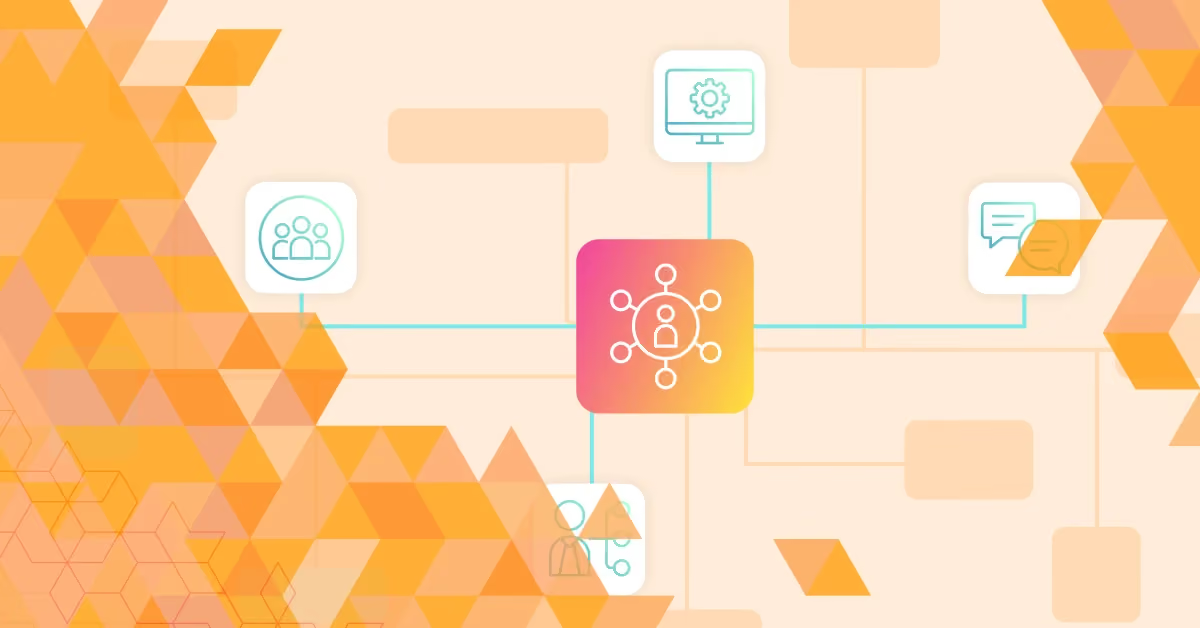
This approach unites leaders from Internal Comms, IT, and HR to build a cohesive strategy focused on people. It's not about one department taking ownership; it’s about shared responsibility and a new standard for how people and technology work together.
This task force works together to:
- Develop a comprehensive people strategy.
- Design and manage a personalized employee experience.
- Connect individual improvement to company-wide goals.
- Analyze metrics to continuously refine the experience.
By working as a unified team, these leaders can break down the walls that hold organizations back. They can ensure that technology investments (IT), cultural initiatives (HR), and strategic messaging (Internal Comms) all work in harmony.
How a Modern Intranet Hub can Help
A modern intranet is the engine that powers this collaborative approach. It serves as a central hub that combines communication, collaboration, and productivity tools into one seamless platform. It's a single source of truth that connects every employee—whether they're at a desk or on the frontline—to the information, resources, and people they need.
A platform like LumApps helps the PPO task force meet its goals:
- For IT: It integrates with existing business apps and productivity suites, ensuring a frictionless user experience while maintaining security.
- For HR: It enables personalized journeys for employees, supporting them through key moments and promoting wellness and development initiatives. Plus, you can even embed employee learning and training directly into the intranet.
- For Internal Comms: It provides tools to deliver targeted, engaging content across multiple channels, aligning everyone with the company’s mission and values.
This isn’t just about adopting a new tool. It’s about building a digital workplace that is intuitive, supportive, and designed for employees, no matter where they work.
Collaboration = a Brighter Way to Work
The debate over who owns the employee experience is a distraction from the real work. The future belongs to organizations that recognize it as a shared responsibility.
By forming a People Operations task force and leveraging a modern intranet, you can dissolve silos and create a truly integrated strategy. Fewer silos mean faster decisions, more aligned teams, and a more engaging experience for everyone. It's a smarter way to work, and it starts with bringing your people together.