Why frontline engagement is harder than it looks

Frontline engagement requires a different approach
Frontline engagement can seem simple at first. Keeping employees connected via email, messages, and company updates.
In reality, it works differently.
For organizations with distributed, deskless teams across locations and shifts, engagement depends on something else entirely: reaching employees who are focused on getting the job done, rather than navigating company tools.
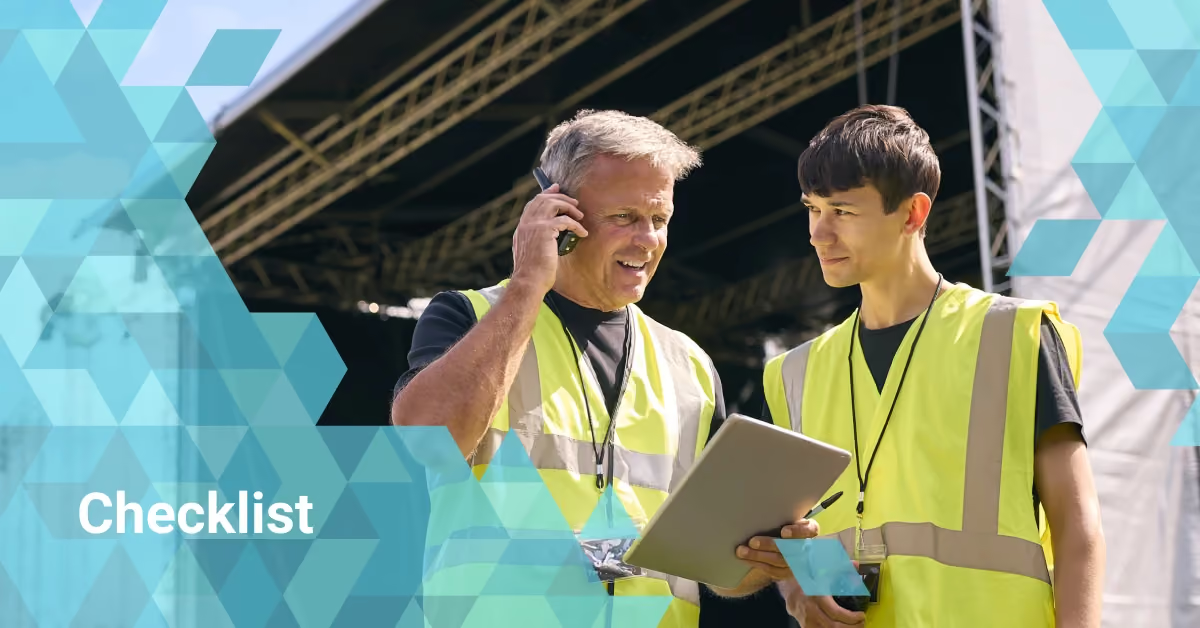
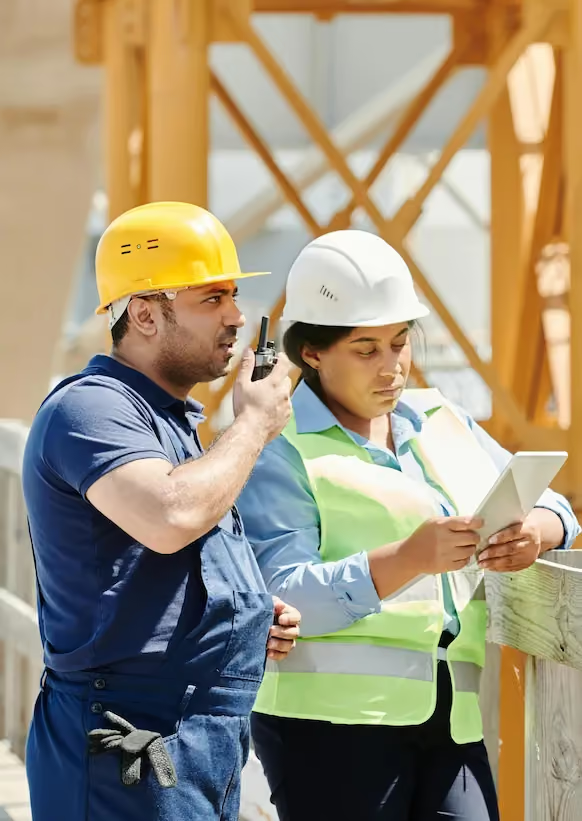
Every day, business happens where frontline employees are: on the shop floor, in the field, in hospitals, warehouses, and production sites. Their work is physical, fast-paced, and customer-facing. They shape customer experiences, maintain the fluidity of operations, and directly contribute to business performances.
As workforce models continue to evolve, AIHR highlights growth in blue-collar and new-collar roles. This reinforces a simple reality: employee experience must include frontline teams, wherever and however they work.
That’s why frontline engagement requires a different level of intention.
Understanding where frontline engagement really happens
For frontline teams, speed, service, and execution come first. Focused on tasks. Responding to customers. Managing operational priorities in real time. Their attention is on the work itself.
Their attention is on the work itself. And that work does not happen within the flow of the organization’s communication channels.
This changes everything.
Engagement does not happen because information exists. It happens when information reaches employees in a way that fits their reality.
That’s why strategies designed for office environments rarely translate directly to frontline teams.
To engage frontline employees, organizations need to start from how work actually happens on the ground.
Building engagement through access
In office environments, communication flows through emails, meetings, and desktop tools.
For frontline teams, access is the foundation of engagement:
- Access to information
- Access to training
- Access to company updates
- Access to recognition
More than availability, it’s about relevance.
When information reflects what teams experience daily — their tasks, constraints, and priorities — it becomes meaningful. It shows that the organization understands their reality.
That’s what turns access into engagement.
Rethinking communication for frontline teams
Most communication models were built for desk-based teams.
Frontline teams need something different.
They don’t go looking for information. They don’t have the time — or the habit — to check multiple tools or inboxes while working.
Information needs to reach them.
It needs to be mobile, immediate, and relevant to the moment. Delivered through the devices they already use, aligned with their shifts, and connected to what they need to do next.
A company-wide email sent during office hours may never reach a store associate starting an evening shift or a technician working on site.
Effective frontline communication is targeted, accessible, and designed to support execution, while keeping employees connected to the bigger picture.
Adapting learning and recognition
Continuous learning is essential, especially as skills needs evolve. AIHR identifies the growing skills mismatch as a key workforce trend, increasing the need to align training opportunities across teams and locations.
For frontline teams, learning works best when it fits into the flow of work.
A short mobile module before a shift.
A quick process update accessible on demand.
A safety reminder received at the right moment.
When learning becomes part of the workday, adoption increases and skills develop naturally.
Recognition follows the same principle.
Too often, recognition stays local. A great performance is acknowledged within one store, one warehouse, or one team, but never reaches the broader organization.
Making recognition visible across locations reinforces connection, reinforces culture, and highlights the role frontline employees play in delivering real impact.
Boosting engagement with the right digital workplace
Frontline engagement contributes directly to important business outcomes. It directly influences safety, service quality, and operational performance.
Employees who feel informed, included, and supported are more likely to deliver consistent service, follow safety procedures, collaborate effectively, and adapt to change.
One of the biggest barriers remains fragmentation.
Communication lives in one tool, training in another. Operational updates somewhere else.
With time, fragmented work creates friction and makes engagement harder to sustain across locations.
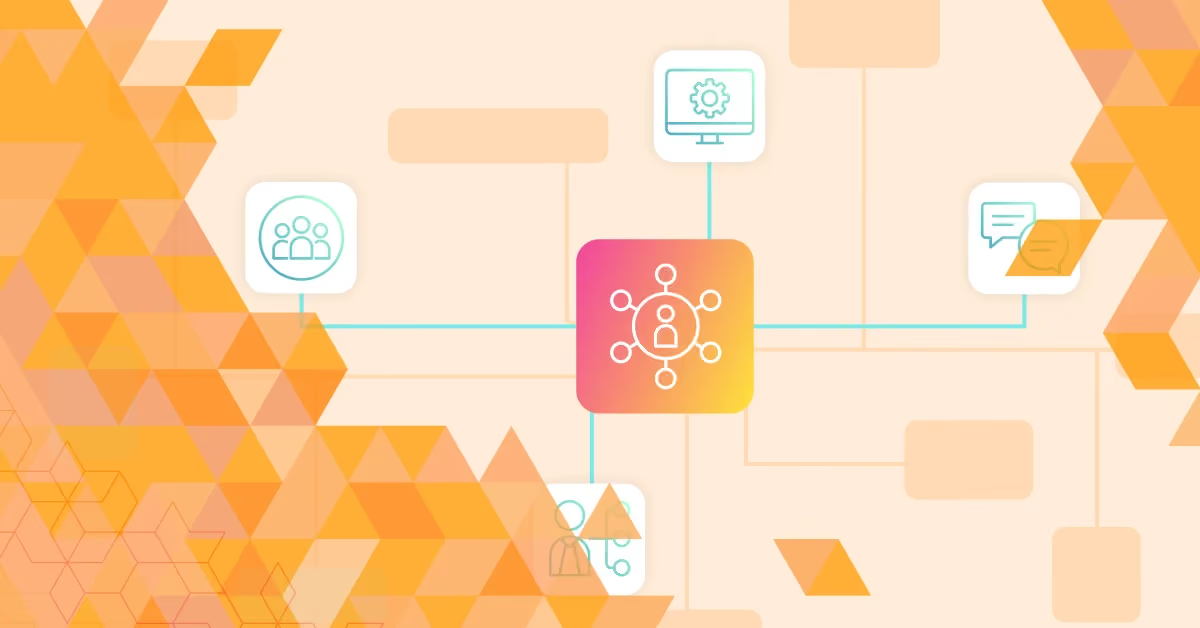
Bringing these experiences together into one shared platform reduces complexity and makes engagement part of daily work.
A unified digital workplace helps frontline employees:
- Access important updates quickly
- Find training when they need it
- Stay connected to company priorities
- Receive recognition that is visible across teams
- Navigate daily work through one simple experience
With LumApps, organizations connect communication, learning, recognition, and operational updates into one digital hub — designed for every team, from headquarters to frontline.
Creating inclusion
Frontline employees are often the most visible part of the organization.
They deliver the service. They represent the brand. They execute the work.
Yet in many organizations, they remain the least connected to the company narrative.
Closing that gap is essential.
When frontline teams are fully included, engagement grows naturally.
Alignment becomes practical when employees can easily access what matters to their role.
A store associate can check the latest campaign guidelines before opening.
A warehouse employee can review updated safety procedures before a shift begins.
A field technician can receive urgent operational changes in real time, without relying on second-hand communication.
Participation becomes natural when tools fit into their daily work, completing training between tasks, responding to quick surveys, recognizing peers, or finding answers instantly.
Connection becomes visible when every employee feels part of the same organization, regardless of role or location.
A unified online hub helps create that experience by giving everyone access to the same news, culture, recognition, and resources in one place. It ensures frontline teams are not working aside from the organisation, but fully included in it.
A unified experience to strengthen frontline engagement
Frontline engagement may look simple from a distance.
In practice, it requires thoughtful design.
It starts with understanding the realities of shift-based, mobile, and operational work. Then building experiences that are easy to access, relevant in the moment, and consistent across locations.
When engagement is designed around how frontline teams actually work, it does more than connect people.
It strengthens culture, improves execution, and drives long-term business performance.