How Fitler Club Used Beekeeper to Survive (and Thrive) During COVID-19
COVID-19 blindsided and derailed operations for many businesses during 2020. But some were able to pivot their internal communication strategy and come out stronger than ever before.
COVID-19 blindsided and derailed operations for many businesses during 2020. But some were able to pivot their internal communication strategy and come out stronger than ever before.
Case in point: Fitler Club, an innovative hospitality space that launched in 2019 and built a loyal staff and customer base before the pandemic forced them to temporarily close their doors.
Let’s take a closer look at the challenges they faced at the onset of the crisis and how they leveraged Beekeeper’s mobile productivity and collaboration platform to preserve their company culture for the next normal.
Want to learn more about their success story? Download the case study here.
Maintaining Company Culture During a Crisis
When Philadelphia announced its first shelter-in-place order and shutdown for non-essential businesses, Fitler Club was forced to furlough almost all of its fully-trained staff members.
“The biggest problem was: how do we maintain this incredible staff, which is our secret weapon, and keep them engaged during a time of crisis and uncertainty.”
- Jeff David, President, Fitler Club
Regardless of the shutdowns, taking care of employees was Fitler Club’s first priority. They did so by covering healthcare costs and setting up a food bank for their team members. But, they also needed a way to reach and stay connected with their workers no matter where they were.
Enter: Beekeeper.
The company initially used Beekeeper to broadcast updates about the next food pick-up and answer FAQs about healthcare benefits. Then, as staff became more engaged and communicative on the mobile platform, Fitler Club started exploring what else it could do.
Taking Internal Communications to the Next Level
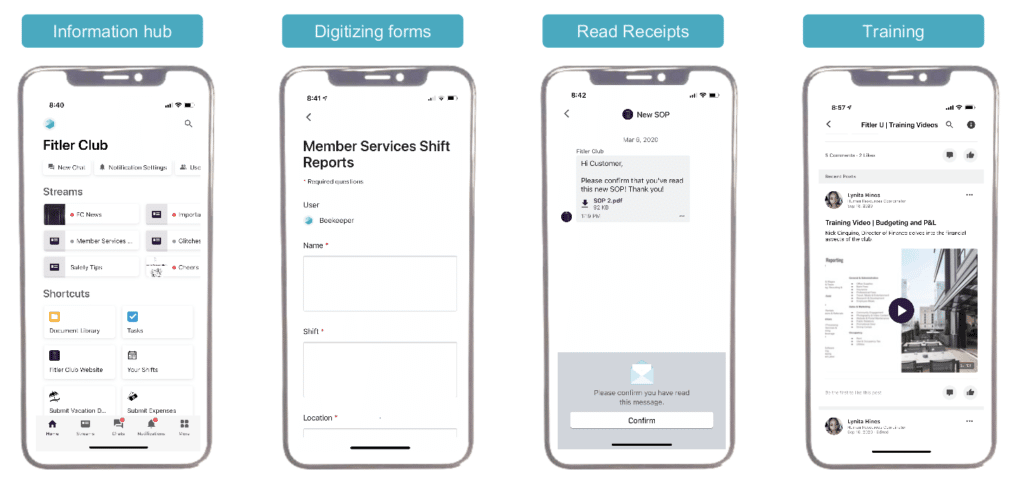
As restrictions eased and staff returned to work, Fitler Club made Beekeeper the centralized hub for all their training needs. They digitized important training manuals and created new communication streams within the platform such as:
- Member services shift reports
- Glitches and recovery
- Important safety notifications
- Membership updates
Digitizing forms and training manuals kept staff on the same page even when safety protocol and social distancing guidelines turned on a dime. The company also used tasks and checklist features to help housekeeping and valet teams work more efficiently.
Beekeeper was the perfect fit because it enabled Fitler Club to replicate its company culture across daily operations.
Having adopted Beekeeper in the first phase of shutdowns, the company was better equipped to maintain high employee engagement as the second wave hit.
“The gravitation of emotional intelligence and business intelligence, data and human beings - this is why there’s such a value add for a platform like Beekeeper.”
Transitioning to the Next Normal
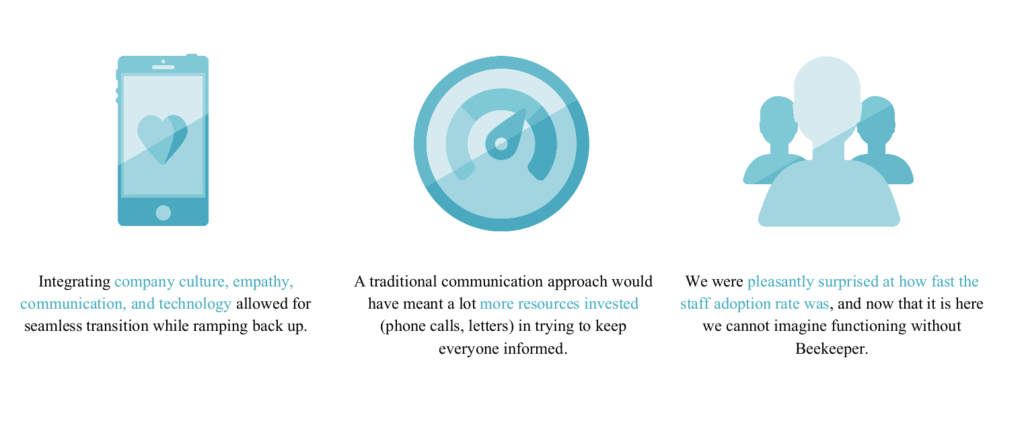
For Fitler Club, Beekeeper wasn’t just a temporary crisis communication solution. It became an integral part of transitioning into the next normal - whatever that would look like.
As restrictions eased once more in early 2021, Fitler Club saw their membership and occupancy rates ramp up quickly.
Using Beekeeper, Fitler Club was better able to:
- Make a positive impact as they reopened their doors
- Maintain strong relationships between guests and staff
- Keep track of the 1,500 members and their unique needs
- Ensure the guest experience more personalized than ever before
“Involved and engaged staff equals happy members.”
Recognizing their employees became another priority for Fitler Club. They introduced a “Cheers for Peers” initiative on Beekeeper to celebrate birthdays and work anniversaries for everyone to see.
To their surprise, they found that some of the most active and engaged users on Beekeeper were the housekeeping staff that had previously been their least seen or heard workforce.
Doing More with Less
Initially, Fitler Club wanted to save resources by adopting a digital platform. Keeping their employees informed via email, phone calls, or texting simply wasn’t practical during the pandemic.
“Our biggest discovery as an operator was you could do more with less. Not because of financial constraints, but because of efficiency constraints.”
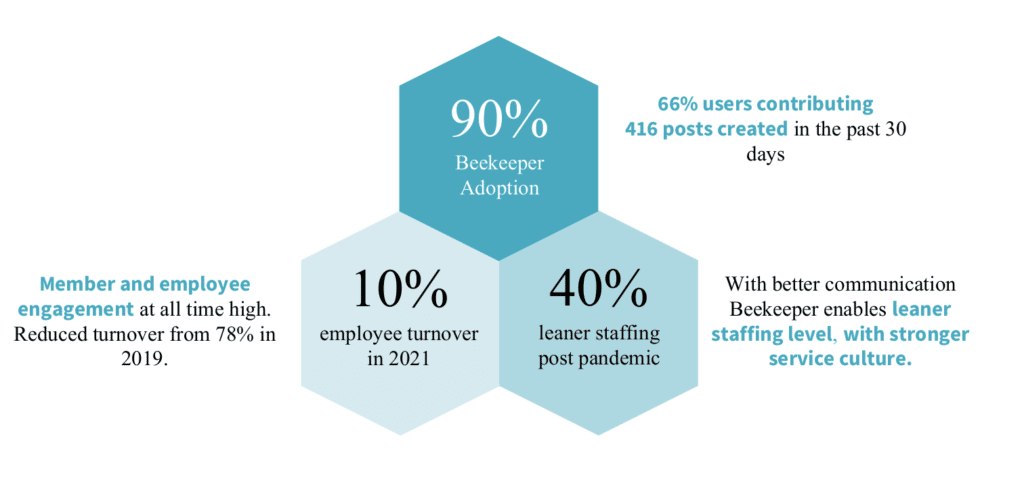
Fitler Club quickly increased its staff from 28 employees at the start of the pandemic to 138 full-time employees in March of 2021. And, thanks to Beekeeper, the company:
- Achieved 40% leaner staffing and a stronger service culture
- Reduced turnover rates 68%
- Better engaged their frontline workers in a way they had never done before
For Fitler Club, doing more with less meant using resources more effectively. Beekeeper not only filled communication gaps but became an essential platform that employees truly enjoyed using.
Download the 2-page case study to learn more about how Fitler Club used Beekeeper to boost engagement.
About the author
Top