How Veolia turns 33 intranets into one
Digital workplace consolidation
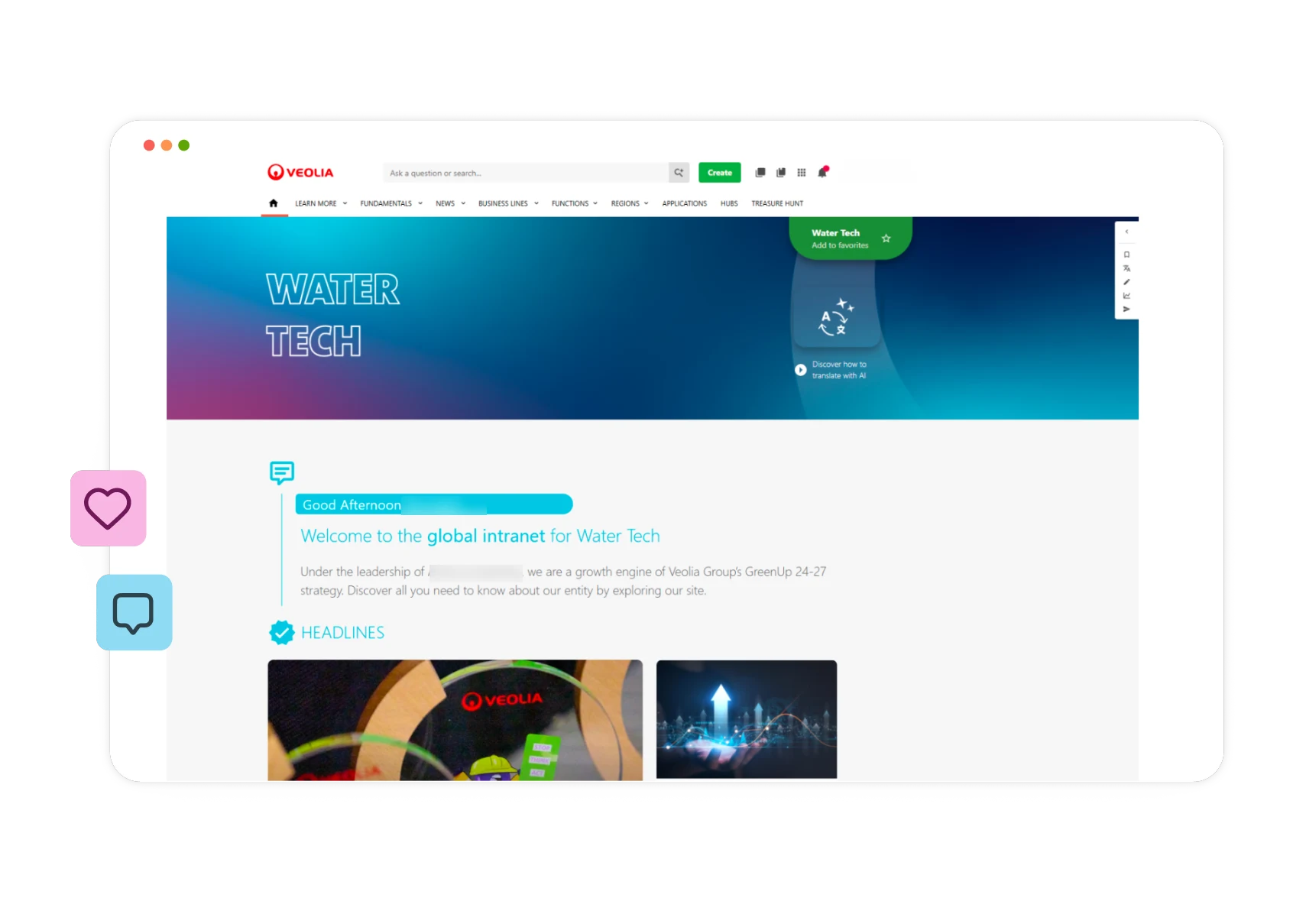
Following a global merger, Veolia's water technologies business replaced 33 LumApps sites with a single global intranet while tackling thousands of Google Sites. 16K+ unique visitors arrived in the first month, close to the full workforce of around 17,600 people across 54 countries.
Impact in numbers
- 16K+ unique visitors at launch, November 2025
- 3.5M+ page views, with a single piece of content reaching 69K+ views
- 1.1K+ comments and 12K+ reactions, with up to 213 comments and 755 likes on a single post
At a glance
- Customer: Veolia Water Tech
- Industry: Water technology and services
- Workforce: around 17,600 employees
- Footprint: 54 countries
- Platform: Water Tech, the global intranet
- Project team: Internal and executive communications, with regional comms leads, content owners, and Hub owners
- Goal: one governed global site that carries One Veolia collaboration across every region, business line, and function
The context
Veolia's water technologies business, part of Veolia Group, is a growth engine of the group's GreenUp 24-27 strategy.
Around 17,600 employees work across 54 countries, spread over business lines, functions, and regions.
The challenge
Employees looked for information across 33 LumApps sites. Content had grown faster than the structure holding it, and each region carried its own experience.
The estate held 2.6K+ pages and 4.6K+ news stories, 7.3K+ items in all. Of those, 1.6K+ pages had stayed untouched for a year, and 3.1K+ pieces of content drew fewer than 20 views over the same period. Finding a reliable answer took time, and collaboration across regions stayed limited.
Post-merger integration raised the stakes. Three goals framed the project:
- Bring global and local information into one governed place
- Give every region, business line, and function a consistent way to publish
- Support One Veolia collaboration with one shared identity
The solution: one global site, governed end to end
The project set out to solve four big issues: duplicated content, out-of-date content, locked content, and content that language restrictions made inaccessible.
Step by step, Veolia's water technologies business builds one global site as the entry point to global and local information. Corporate content, business resources, and collaborative spaces now sit together, in a structure that reads the same in every region.
Structure that scales
A four-layer model carries global, regional, country, and team content, so scale and local relevance hold together. Templates, page layouts, and design standards keep the experience consistent across every region.
Hubs for teams
Dedicated Hubs let teams and functions publish and collaborate on their own content. Collaborative Spaces take over from fragmented legacy tools, which keeps the main site clear.
Governance that holds
Content ownership rules, validation workflows, and a structured news process set who publishes what, and when. Training carries the model to every content team.
Navigation by journey
Navigation follows the way employees search, which shortens the path to the content that matters and lifts discoverability across the site.
The launch campaign
The campaign runs on storytelling, teasing, gamification, and local activation across the whole transition.
Milestones and features arrive as they become ready, so visibility stays continuous rather than concentrated in a single announcement.
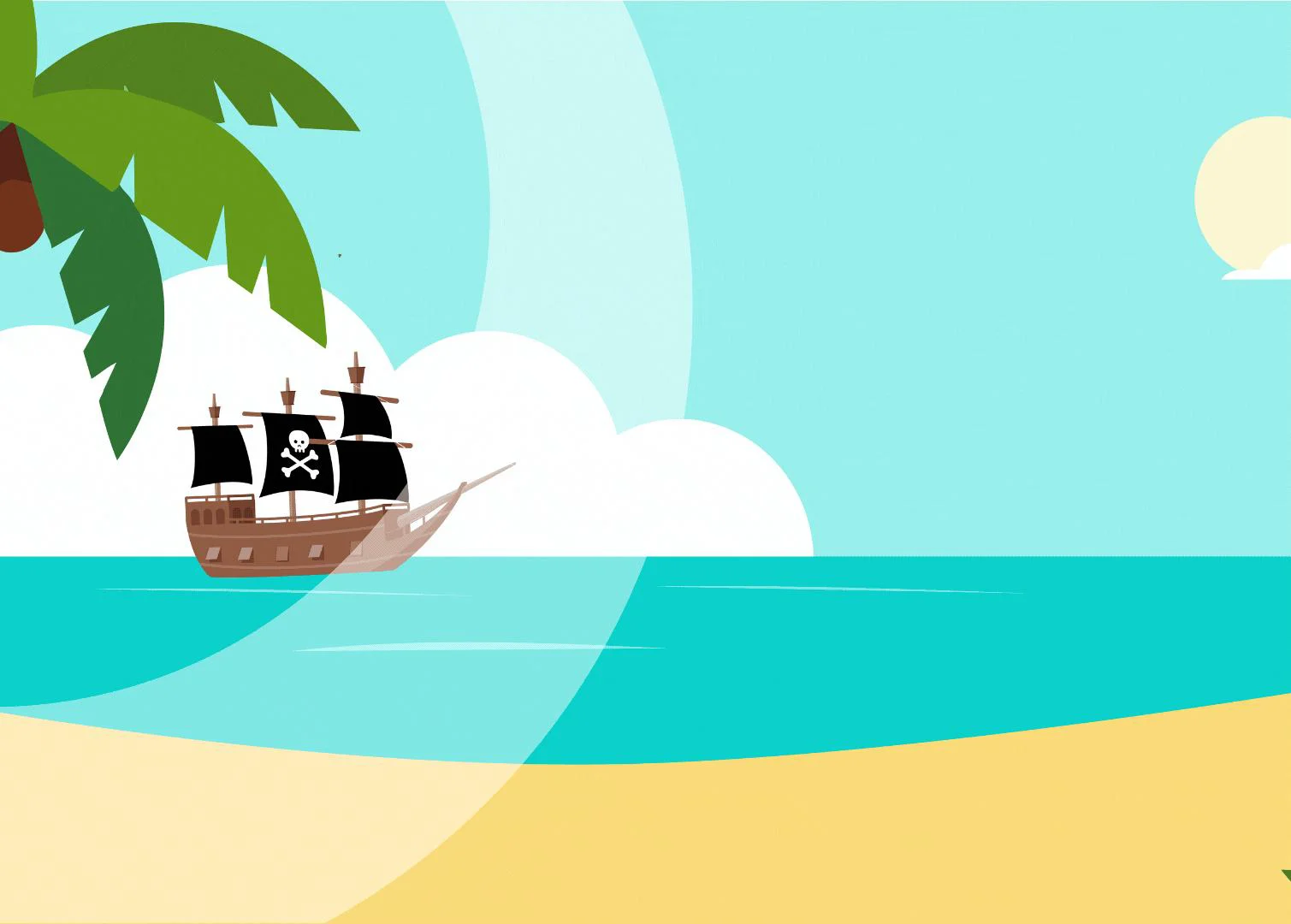
The centrepiece is a digital treasure hunt. Ten chests hide across the site, and employees explore structure, content, and features to find them. Teaser communications, internal relays, and targeted messaging carry the campaign through news, emails, posters, and TV screens.
The adoption: build with, then hand over
The central team engages stakeholders early, works on their content, and builds pages on their behalf to hold quality and governance. Ownership then moves back to them, with guidelines, tools, and training.
Content leads, Hub owners, and local communications teams work in parallel over several months to migrate content and promote the new intranet within their teams.
A dedicated Hub brings together everyone who builds and maintains the intranet, to share best practices, updates, and answers.
Employees receive onboarding materials, training resources, and ongoing support. The Promote feature carries campaign keywords onto printed materials and TV screens, guiding people to the matching content on the intranet.
Along the way, a new operating model takes shape: internal and executive communications run from a central team, working alongside regional comms leads, content owners, and Hub owners across the business.
The results
- 16K to 18K monthly unique visitors from launch to March 2026
- 27K+ visitors since launch, which points to reach extending into the wider Veolia population
- Average session duration up from 1 min 43 s in November 2025 to 2 min 34 s in March 2026, and 2 min 29 s on average since launch
- 839 pieces of content, 490 posts, 339 articles, and 162 events published across the site
- Strong uptake of collaborative Spaces, taking over from fragmented legacy tools
What made the difference
- Build the pages, then hand them back
The central team worked on stakeholders' content and built pages on their behalf, then handed ownership back with guidelines, tools, and training. - Release in milestones, not one moment
Milestones and features arrived as they became ready, so visibility stayed continuous while the platform kept growing. - Turn discovery into a treasure hunt
A digital treasure hunt sent employees through the new site to find ten hidden chests, so exploration led the way to adoption.
What's next
Historic LumApps sites closed in December 2025, and permanent deletion followed in March 2026. Regional comms teams gained new campaign tools in June 2026, and Broadcast is now rolling out. AI-assisted translation covers 39 languages, and the Promote feature continues to connect physical campaigns to intranet content.