Why autonomy is more important than flexibility

As the modern workforce continues to evolve, companies are realizing that traditional management structures may no longer be the most effective way to engage and empower their employees. While workplace flexibility has been a hot topic in recent years, it is increasingly clear that autonomy is even more important for the success of both employees and organizations.
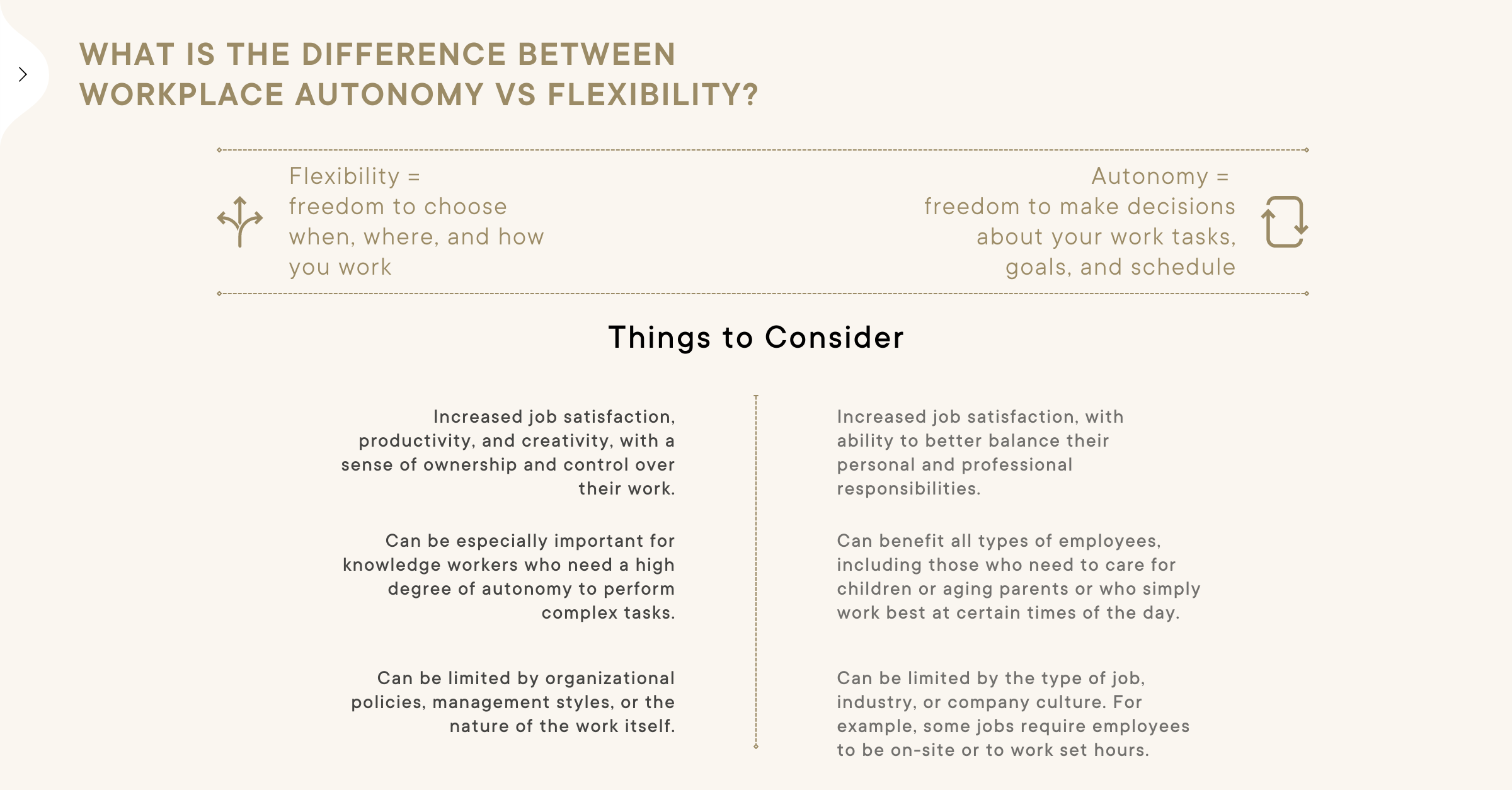
So, what is workplace autonomy, and why is it so crucial? Put simply, autonomy refers to the ability of employees to control their own work. Forrester Senior Analyst Julie Mohr noted that “autonomy is important to the employee experience.” When employees are free to make decisions, work independently, and take ownership of their projects, they are more likely to be satisfied with their jobs, more productive, and more creative.
On the other hand, workplace flexibility simply refers to the ability for employees to work remotely or adjust their schedules as needed. While flexibility is a valuable perk, it does not necessarily translate to increased autonomy. In fact, many employees may feel that their work is even more closely monitored when working from home or on a flexible schedule.
So, how can companies empower their employees to be autonomous, and what role does technology play? Mohr noted that technology is a “key element in designing a purposeful and meaningful employee experience that can deliver measurable results.”
One powerful tool for supporting autonomy is video learning, and that’s where LumApps Play and LumApps Journeys come in. By creating video training modules and targeted learning paths, companies can offer their employees the freedom to learn at their own pace, on their own time, and on the device of their choosing. This not only increases autonomy but also improves the quality of the training itself, as employees can pause and rewind videos to review important concepts and complete a Journey anytime, anywhere, on the web, or on the go with the LumApps mobile app.
In addition to video learning, social learning communities like LumApps Spaces can also be a valuable resource for promoting autonomy. By creating online communities where employees can share their knowledge and expertise, companies can foster a culture of collaboration and peer learning. This not only gives employees more control over their own learning but also empowers them to share their knowledge and experiences in the method they choose (posts, articles, events, videos).
Technology is a key element in designing a purposeful and meaningful employee experience that can deliver measurable results.
— Julie Mohr, Senior Analyst at Forrester
Finally, digital employee companions, or chatbots like LumApps Digital Assistant, are another powerful tool for promoting autonomy. By streamlining access to apps, knowledge, and resources in the flow of work, employees are empowered to be autonomous in getting the help, information, or resource they need while freeing up time for IT Support and HR Ops teams to focus on critical issues and added-value activities.
While workplace flexibility is certainly a valuable perk, it is autonomy that truly empowers employees and drives organizational success. By leveraging video, social learning tools, and AI-powered digital assistants, companies can support autonomy and create a more engaged, productive, and creative workforce. In today's rapidly changing business landscape, autonomy is no longer just a nice-to-have – it's a necessity for companies that want to stay competitive and thrive.
Attract, Engage and Retain: The Employee Experience Advantage
In addition to ROI, employee experience measures help companies succeed at retention and recruiting.
We would love to know more about your goals. How can we help?

.webp)