2021 Retail Trends: The Digital Future Of Shopping Has Arrived
Chances are today’s retail industry looks far different than what you remember from this time last year. COVID-19 primarily drove the seismic industry shift, but the digital revolution was a long time in the making.
Chances are today’s retail industry looks far different than what you remember from this time last year. COVID-19 primarily drove the seismic industry shift, but the digital revolution was a long time in the making.
2020’s stay at home orders and national lockdowns forced retailers to adopt digital business models if they wanted to survive. And that’s exactly what they did.
Now, retailers are continuing to adapt to the next normal by adopting new retail technologies and prioritizing digital connectivity for their frontline workforce.
Here are the top retail industry trends transforming the industry in 2021.
From Retail Survival To Retail Resilience

Like with many industries, COVID-19 changed everything for retailers. But different retail businesses faced different challenges.
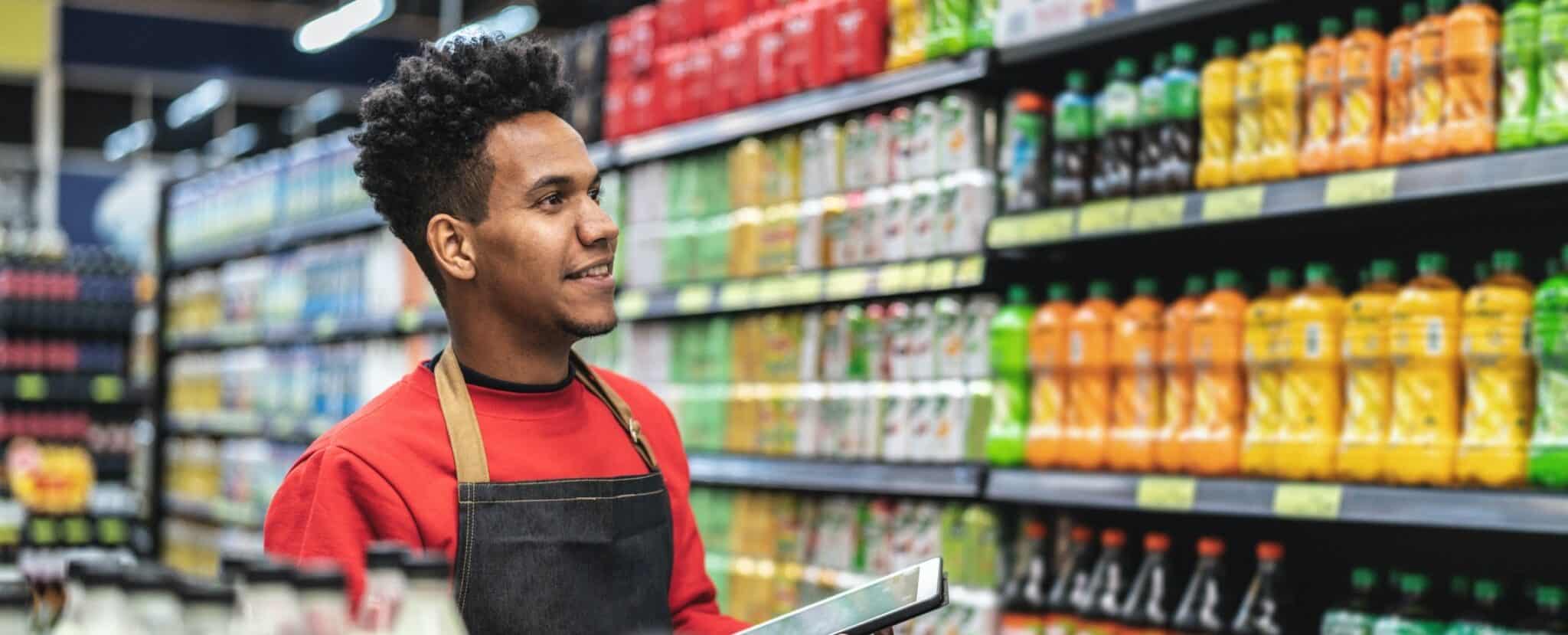
Essential retailers, like grocers and convenience stores, were working overtime to keep up with the new lockdown demand. In fact, larger corporations, like Amazon, Walmart, and UK-based Tesco, had to hire employees just to keep up.
At the same time, these companies were faced with evolving health and safety protocols that, at times, changed overnight.
Adopting new retail technology was one way grocers adapted to the situation while maintaining social distancing guidelines, such as:
- Cashierless checkouts
- Online grocery ordering and curbside pick up
- Smart grocery carts
- Mobile checkout apps
According to recent research, 56% of consumers tried a new retailer during the pandemic. And e-commerce sales increased 32.4% in 2020, while brick-and-mortar sales decreased by 3.2%.
Those with an e-commerce strategy were not hit as hard as those that relied on traditional in-store foot traffic. But, again, retail technology made the transition less painful.
For example:
- Bookstores moved to online and audiobook sales
- Fitness centers shifted to Zoom classes
- Escape rooms transitioned to monthly subscription puzzle boxes
It’s fair to say retail technology was the game changer of 2020. And it’s just getting started.
Let’s take a look at our top three retail trends in 2021.
1. Digital Technology Dominates 2021 Retail Industry Trends

Digital technology is expected to take center stage among retail industry trends in 2021.
From digital transformation acceleration to cybersecurity and chatbots, digital connectivity is essential for retailers in this next normal.
Acceleration Of The Digital Transformation
Digital enablement in the retail industry has been a long time coming. With the growth of e-commerce, the industry was just on the cusp of its digital revolution.
Then, the world went on lockdown, and businesses moved quickly to stay ahead of the game.
In fact, some estimate the retail industry has invested in three years’ worth of digital transformation in just six months.
Looking to 2021 and beyond, digital connectivity during each step of the buying process will become mission-critical.
Digital transformation technology for the retail industry in 2021 and beyond will include:
- AI
- AR and VR
- Big Data
- Cloud Infrastructure
- Mobile Employee Apps
- Robots and Drones
A core component of the digital revolution is digital connectivity for frontline workers. At Beekeeper, we’ve identified four steps companies should take in creating their digitally-enabled workplace:

- Reach & Connect: Start by reaching and connecting with the entire workforce, no matter where they are.
- Digitize: Transform traditional, top-down communication channels like paper-based and in-person processes with flexible digital channels that can be updated instantly.
- Automate: Save time by automating existing workflows and processes through integrations and chatbots.
- Optimize: Continuously improve processes with access to rich data and analytics.
In digitally enabling frontline retail workers, businesses empower their employees with:
- Mobile-first solutions they can use on the go
- Access to critical information to do their jobs while abiding by health and safety regulations
- Readily available digital materials – such as shift schedules, training information, and safety guidelines
- Open feedback and recognition channels so they feel heard, appreciated, and recognized
Cybersecurity Plays A Key Role in 2021
Online shopping hit a new high in 2020, but so did cybersecurity attacks. According to recent research, 24% of all cybersecurity attacks were aimed at retailers in 2020. That was more than any other industry.
Many businesses recognized this growing trend and ramped up efforts to address their vulnerabilities before the holidays. Tripwire found that 78% of retailers took added precautions ahead of the busy holiday season last year.
In 2021, technology and security executives want to do better – with less. 55% plan to increase their cybersecurity budgets this year, even with stagnant or lower budgets compared to 2020.
How do they plan to do that?
For starters, more than half are planning to add more team members to address cybersecurity. Additionally, small businesses will take added measures to protect themselves and their customers, including:
- Creating a cybersecurity strategy to address growing threats
- Training employees on how they can help protect the business from cyber attacks
- Downloading trusted security software throughout their technology assets
- Remembering to regularly back up their data to a secure location
- Being more diligent in updating passwords and implementing multi-factor authentication when needed
Pro tip: The Federal Communication Commission provides excellent resources for small businesses elevating their cybersecurity strategies this year.
Other IT Retail Industry Trends
Outside of cybersecurity, there are other IT technology trends in retail picking up speed in 2021. Such as chatbots.
Chatbots are a retail technology that mimics human conversations via voice or text chats. And they are expected to become even more popular in 2021.
With the move to online retail, customers can place orders any time of day from any device. But, what do you do when a customer has a question before they place an order at midnight your time?
The benefit of chatbots is that they can be used to help customers 24/7. They also cut down on wait times and get answers to customers faster.
Looking ahead, the chatbot market is expected to reach $102 billion by 2026, compared to $17 billion in 2020.
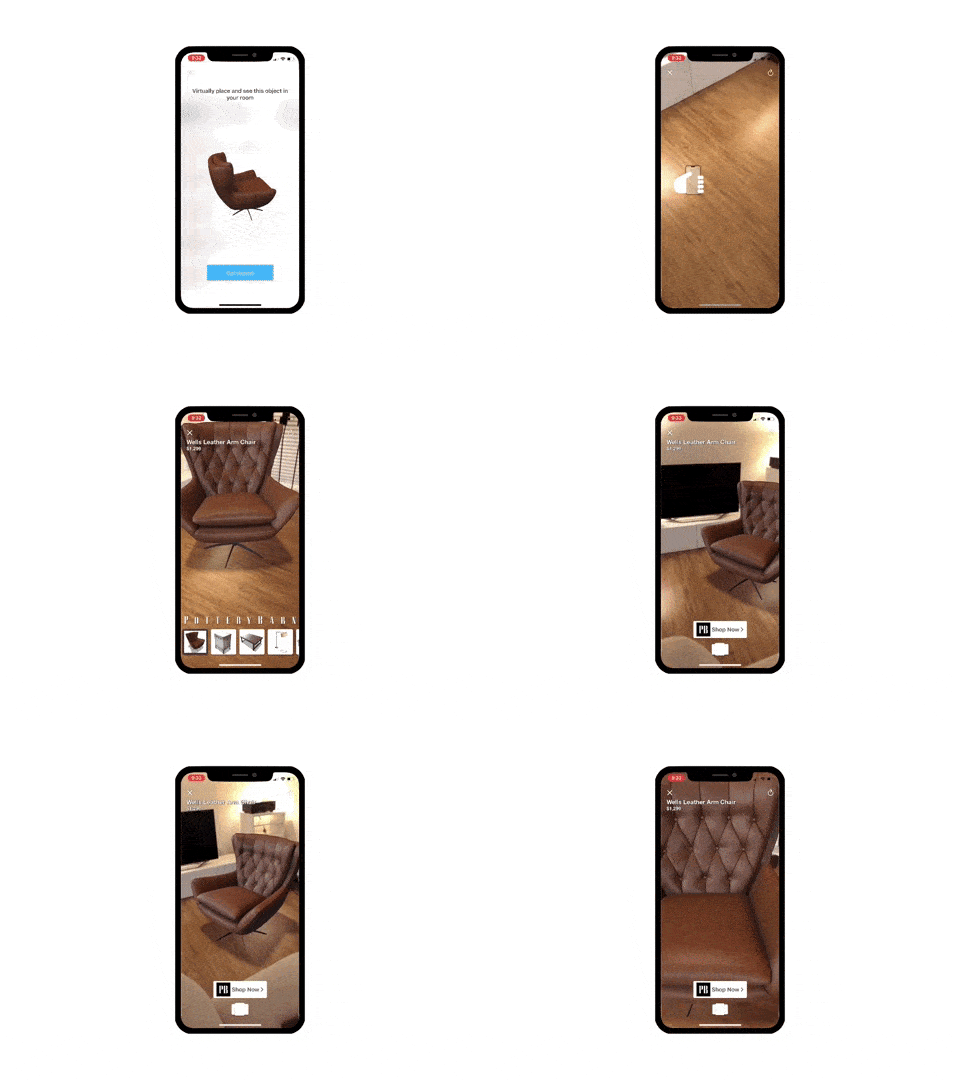
Then there’s AR. Augmented reality (AR) technology, such as virtual fitting rooms and try-on beauty tools, is expected to accelerate in 2021.
According to Harvard Business Review,
Virtual try-on experiences are an excellent use case for AR in retail: allowing consumers to preview products to scale digitally in their own homes, on their own bodies, and then instantly purchasing the corresponding physical product.”
In 2020, 32% of consumers used augmented reality technology, and businesses are taking note. According to the IDC, augmented and virtual reality spending is expected to increase from $12.0 billion in 2020 to $72.8 billion in 2024.
Considering 38% of customers are still hesitant to try on items in the store due to COVID-19, augmented reality gives businesses a new option. And consumers love it. Augmented reality creates a fun and engaging shopping experience – no matter if it’s for clothes, cars, or furniture – from the comfort of their homes.
2. Mobile Retail Technology Digitally Enables Essential Workers
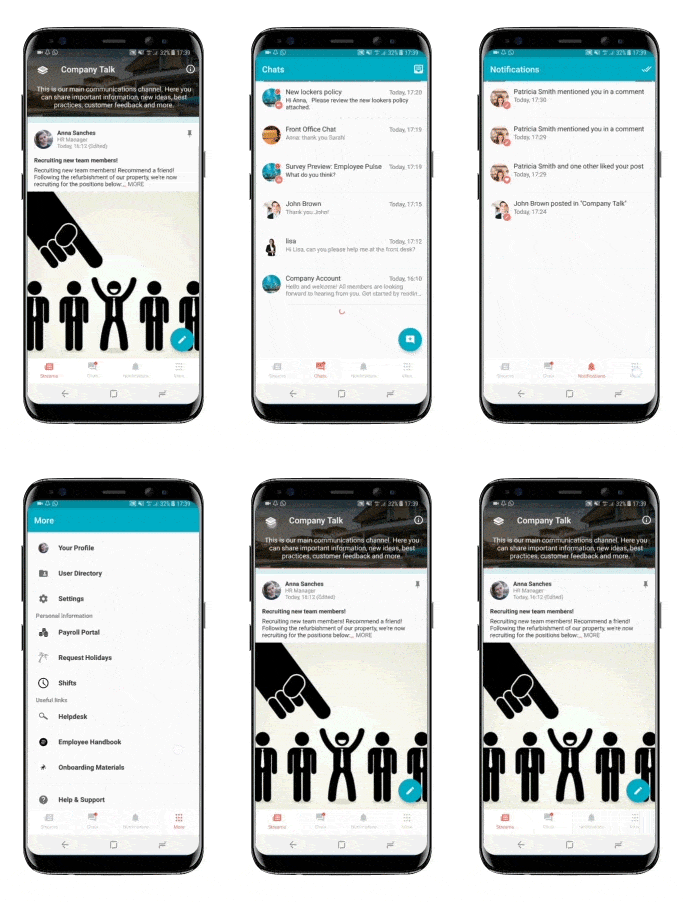
Mobile adoption is another top retail trend going into 2021.
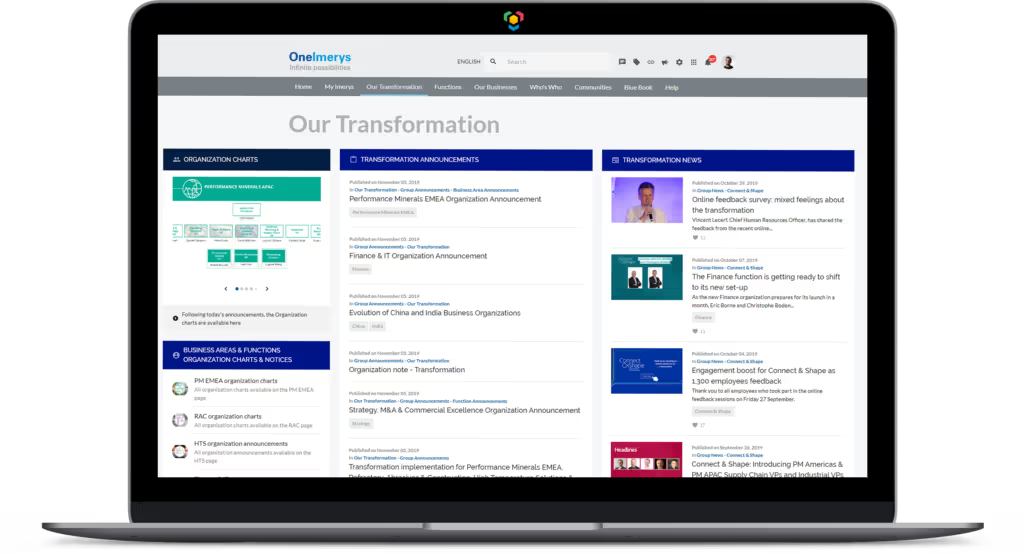
Before the global pandemic, it was no secret that frontline employee technology for retailers wasn’t up to snuff. Yet, 80% of the world’s workforce is made up of deskless employees, and only 1% of enterprise software funding is directed toward them.
It’s unsurprising that frontline employees spent as much as three hours per day looking for information.
Now, employers recognize the gap. According to a Harvard Business Review report, 86% of polled companies believe frontline workers need better technology-enabled insights to make good business decisions.
The benefits of providing retail employees with an accessible mobile platform for essential work-related information include:
- Prioritizing employee health and safety
- Increasing business agility
- Improving employee productivity
- Creating a more engaged and empowered workforce
Not to mention the cost savings. A natural foods grocery retailer connected its entire workforce to a centralized employee communication app and reduced email volume by 90%. The retailer also digitized its paper-based processes, resulting in $7,000 in cost savings.
But, the key here is to select the right tool with your frontline employees in mind. There is a crowded marketplace for mobile employee communication tools. So much so, one retail worker’s job required seven apps.
Pro tip: Check out Beekeeper’s Marketplace to see what other workplace apps we integrate with.
Here are the features to keep in mind when selecting your workforce’s mobile solution:
- Out-of-the-box integrations that create a centralized platform for all your workplace systems
- Communication Streams to distribute important corporate news
- Document Library to access digitized guidelines, documents, and reports
- Inline translations to engage with all employees in their native languages
- Shift Schedules to inform employees of their schedules without having to physically go into work
- Chatbots to get employees answers to their most important questions quickly
- Analytics Dashboard to give managers insight into how employees are engaging with the tool
3. Tackling Team Management In Retail
There is no doubt that retail teams were tested in 2020. Everyone had to find a way to adapt to store closures, evolving health and safety protocols, and socially distanced store openings.
When it comes to team management, retailers have two critical priorities for 2021:
- Prioritizing employee emotional wellbeing
- Maintaining team agility and productivity in the next normal
Supporting Frontline Employees Mental Health

One of the most critical trends in retail continuing into 2021 is prioritizing mental health in the workplace.
Throughout the pandemic, frontline employees have carried the stress of keeping themselves and their families safe. These employees, who are primarily in the retail industry, have also dealt with demanding and frustrated customers.
Nunc nisi enim, facilisis nec nibh vitae, pellentesque suscipit orci. Suspendisse laoreet urna id arcu scelerisque, sed mollis dui dictum. Aenean nibh est:
According to USDAW, one in six retail employees suffered abuse on a daily basis because of the pandemic.
Now, employers are working quickly to provide mental health support for frontline employees. Some ways companies are doing this are:
- Partnering with EMQ Boosters to offer employees virtual sessions to reduce stress and increase mental capacity
- Offering subscription access to mobile apps, like Headspace and Moodfit
- Providing free teletherapy access or counseling hours
- Delivering manager training to better support employees struggling with their mental health
Also, let’s not forget how far employee recognition can go. Businesses are prioritizing employee praise when they need it most by giving financial recognition when and how they’re able. For example:
- Covering furloughed employees benefits
- Paying for employee training and development in a new skill
- Matching employee donations to their favorite nonprofits
And, public praise from business leaders is an undervalued recognition tool that’s becoming more prevalent. Using mobile collaboration apps, like Beekeeper, is an effective way for managers and peers to praise their colleagues for a job well done.
Team Agility And Productivity In The New Normal
2020 taught retailers how to adapt quickly. No matter if it was moving business online or keeping their team members updated on changing protocols. The companies that adapted survived.
And, that same trend will continue into 2021.
Bain and Company says retailers will maintain their adaptability, and productivity, in the new normal using workplace technologies.
Those technologies will likely include:
- AI for more immersive shopping experiences
- Automated and contactless systems
- Mobile communication apps that empower employees with access to essential workplace information
When employees have instant access to the information they need, they are better equipped to adapt to changing situations.
This year, businesses are preparing for the slow bounce back to in-person shopping. And when the time does come, they’ll need to lean on an employee base that is knowledgeable, flexible, and digitally enabled.
Most Frequently Asked Questions
What are the current trends in retailing?
- Digital Technology Dominates 2021 Retail Industry Trends
- Mobile Retail Technology Digitally Enables Essential Workers
- Tackling Team Management In Retail
About the author
Top
Related Article
Interested in learning more?