How To Nail Your Organizational Communications Strategy in 6 Easy Steps
We know that’s a bold statement but think about it. How do you ensure employees are aligned with your vision? Or, how do you get essential product changes in the hands of frontline employees?

Organizational communication is the lifeline to business success.
We know that’s a bold statement but think about it. How do you ensure employees are aligned with your vision? Or, how do you get essential product changes in the hands of frontline employees?
Through efficient and effective communication across all levels of the organization.
Kick your organizational communication strategy into gear with our Ultimate Internal Communications Toolkit today!
Successful organizational communication strategies are becoming more urgent as companies start building for their next normal.
Let’s take a deeper look at what is organizational communication and who does it well.
What Is Organizational Communication?

At its core, organizational communication keeps the business wheels turning through the flow of information.
Let’s start at the very beginning by diving into organizational communication theories, definitions, and benefits.
Organizational Communication Definition
We define organizational communication as:
Organizational communication is how businesses interact and communicate with their key audiences, such as employees, customers, suppliers, etc.
Given our organizational communication definition, businesses need to have the right channels to communicate with their audiences. Company communication channels include:
- Newsletters
- Mobile apps
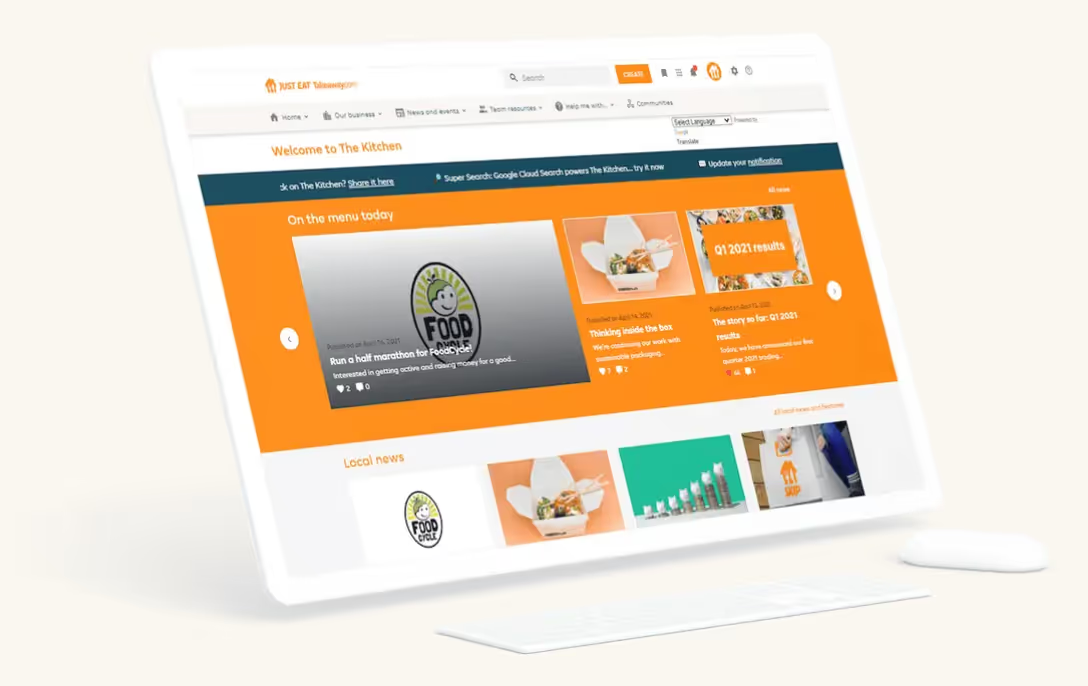
- Intranets
- Town halls
- Memos
- Manuals
- Company website
Businesses have their choice of communication vehicle, especially when it comes to employee communications. So, it’s no surprise that information can get lost in the shuffle.
Now we have an organizational communication definition. But why is it so important?
Over the past several decades, academics have developed organizational communication theories to better connect communication and business performance. Organization information theory is a modern theoretical framework that suggests:
For an organization to sustain it must afford the information needed to achieve the goals. The [organization information] theory states that communication within the organization regulates the environment which influences the behavior of the people and thus the productivit
Based on this and several other organizational communication theories, businesses thrive when information is shared. And employees can significantly influence organizational success with the right information.
The Benefits Of Effective Organizational Communication
Did you know that 85% of employees are more motivated when they receive regular updates from management?
Other benefits of strategic organizational communications include:
- Stronger alignment on the organization’s mission and goals
- Increased employee and customer loyalty
- Reduced misunderstanding and misinformation sharing in the workplace
- Enhanced company culture that values the free flow of information
- Better business reputation built on transparency and trust
6 Types of Organizational Communication
The beauty of organizational communication is that far-reaching. It can go up, down, in, out, or even diagonal.
In essence, strategic organizational communication takes many forms.
Here some of the most common types of organizational communication in the workplace.
- Formal communication refers to the structured way companies communicate within the workplace. Formal organizational communication examples include enterprise-wide distributed information through newsletters, employee communication apps, or CEO videos.
- Informal communication is the less structured format for distributing company information. Informal communication is commonly shared through conversations with colleagues. Anyone remember those watercooler chats?
- Horizontal communication is the free flow of information from individuals on the same hierarchical level within an organization. This directional communication is essential for fostering team collaboration and open feedback.
- Vertical communication is the opposite of horizontal communication. This type of communication flows up and down the organizational hierarchy. Vertical organizational communication examples include email exchanges or conversations between a manager and their direct report.
- Internal communication refers to news and information shared within the confines of the business. Internal communication is directed to employees and is delivered through channels like intranets and town hall meetings.
External communication is the outward distribution of information to external audiences like customers, media, community partners, investors, regulators, etc. External communication is typically used to enhance the company’s brand and public reputation.
How To Create An Organizational Communication Strategy That Works
Organizational communication strategies help companies ensure they are getting the right information to the right people through the right channel. But, it’s not always a simple task.
Here are some important steps to take when crafting a strategy best-fit for your business.
1. Align Your Organizational Communication Strategy To Your Mission
Like any other project, your organizational communication strategy should be interconnected to business objectives.
When building your plan, remember to ask yourself these questions:
- How does this strategy connect to our mission statement?
- Will this strategy support organizational objectives or KPIs?
- How will this strategy improve our relationships?
- Will this strategy help the company get to where it wants to be in the near-, medium- or long-term?
3. Identify Your Audience Members
One of the biggest missteps in organizational communication plans is failing to understand all the relevant audience groups.
When you don’t fully account for your audiences, you risk:
- Overcommunicating information that isn’t relevant to a particular group
- Failing to get important news to the right people
- Negatively impacting employee engagement
You can avoid these situations by segmenting your employee base. Is your workforce mostly frontline? Or, is it mixed between office and remote employees?
Defining your audiences can help you better plan your goals, tool requirements, and content strategies going forward.
3. Set Your Organizational Communication Goals
Your communication strategy will determine your company’s success in reaching, connecting, and engaging with employees. So, it’s essential to map out goals that will define organizational communication success for your company.
Those goals may include:
- Providing a centralized platform to access information
- Creating alignment on the company’s mission, strategy, and objectives
- Enhancing the employee experience to increase morale and productivity
- Safeguarding sensitive company information with more secure communication channels
- Prioritizing open feedback loops for employees at all levels
- Elevating employee know-how through broad information sharing capabilities
- Reducing costs and waste with streamlined information and guidelines
- Building more productive relationships between employees and customers
- Breaking down silos and enhance team collaboration with easy-to-use tools
- Improve workplace efficiencies with standardized procedures and processes
- Maximizing employee retention and satisfaction
No matter your goals, remember to make them measurable. Then, adopt a communication channel that will help track your progress along the way.
4. Prioritize Technology In Your Organizational Communication Strategy
Ever wonder how to leverage the power of operational communication to transform your workforce?
The first step is to leverage a communication tool that trickles through all three levels of the communication pyramid.
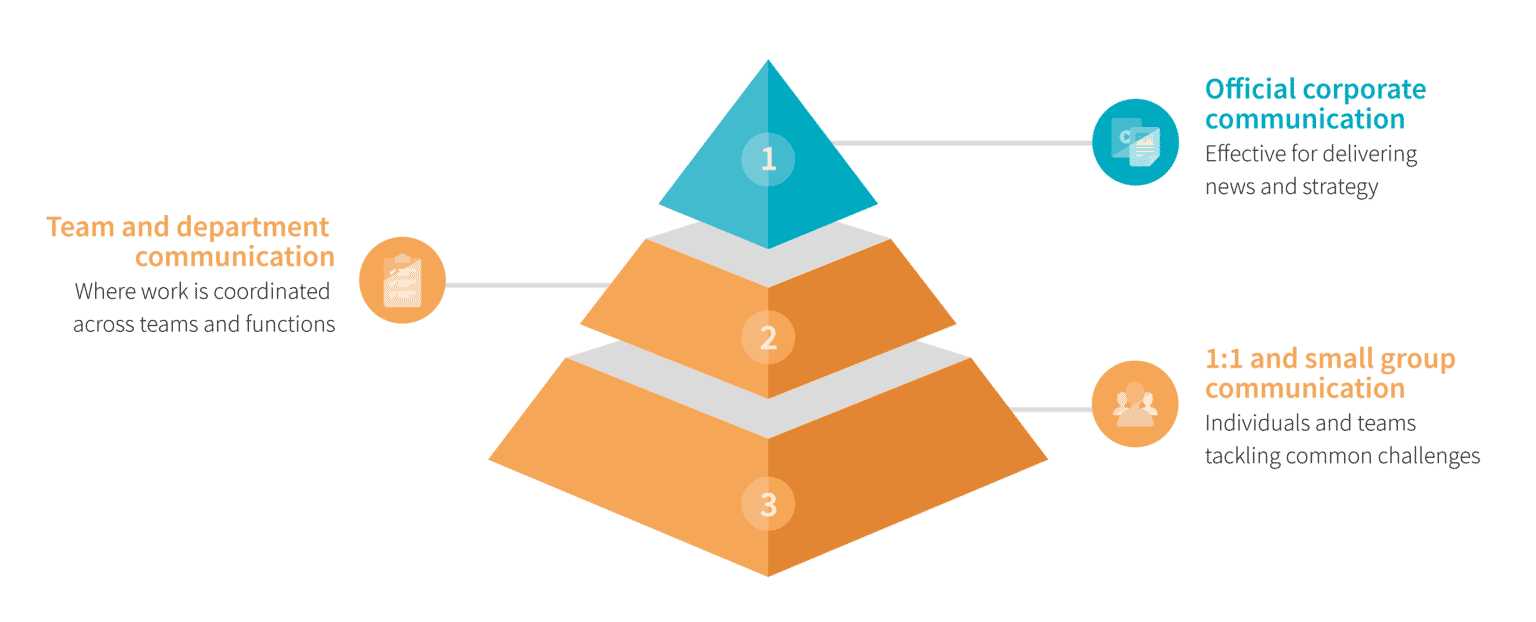
- The top of the pyramid signifies top-down, official communication via traditional channels like company newsletters, intranets, and town hall meetings. At this level, organizations are communicating their broader strategy, vision, and operational goals.
- The middle reflects team and department communication that is more tailored to the group’s function. Example communications include campaign coordination, local crisis management, and SOP (Standard Operating Procedures) updates.
- The bottom is 1:1 and small group communication, including shift scheduling and daily briefings. This level tackles the tactical operational challenges.
Without the right tools, it’s easy for information to get lost when traveling from the top down. Or, even bottom-up.
Any company with a frontline workforce should consider a mobile platform for communication and collaboration, such as Beekeeper. Mobile tools are essential in ensuring customer-facing employees receive the right information with:
- Company News Streams
- Shift Schedules
- Documents
- 1:1 and group chats
5. Remember The Three Cs: Clear, Concise, Consistent
With your goals, audiences, and tools in place, you’re ready to create your content. Just keep in mind that clarity, consistency, and brevity are key to any employee communication.
Here are few tips for creating content that sticks:
- Make your headlines attention-grabbing
- Keep the information digestible
- Make any action request crystal clear
- Use dynamic visuals
- Connect the dots as to why the information is important
- Use read receipt features to track engagement
6. Measure Results And Make Continuous Progresss
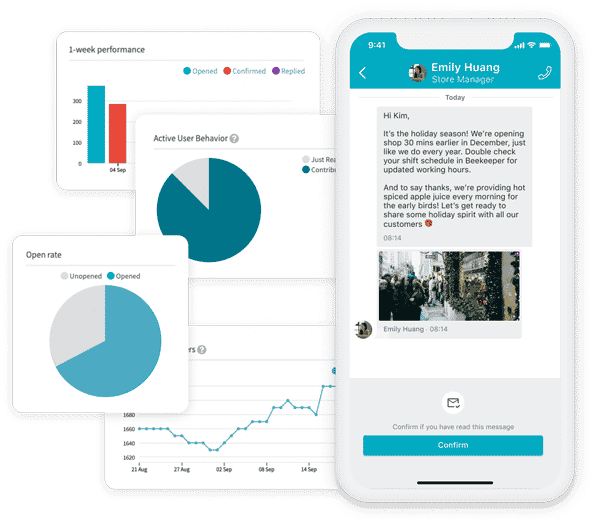
Once your communication plan is up and running, remember to keep your foot on the gas.
Refer back to your goals and start measuring your progress. No matter if you’re tracking employee engagement, safety incidents, or organizational alignment, it’s important to capture your achievements every step of the way.
Then, use data and analytics to get your strategy to the next level. Want to hear directly from the source? You can collect transparent feedback on how to improve your communications through an employee survey.
The steps above may be easier said than done. But they will undoubtedly get your company on the right path to delivering strategic communications that provide measurable value.
Strategic Organizational Communication Examples
Ready to see an organizational communication plan in action? Here are some of our favorite examples.
IRP Meat & Seafood Co.

IRP Meat & Seafood Co. leverages their Beekeeper mobile communication app to communicate important information directly to frontline employees.
With a mobile-first solution, the company:
- Created a streamlined communication channel to cut down on miscommunication
- Could reach furloughed employee during the 2020 global pandemic
- Enabled a real-time tool to deliver critical health and safety information
Mandarin Oriental Hotel Group
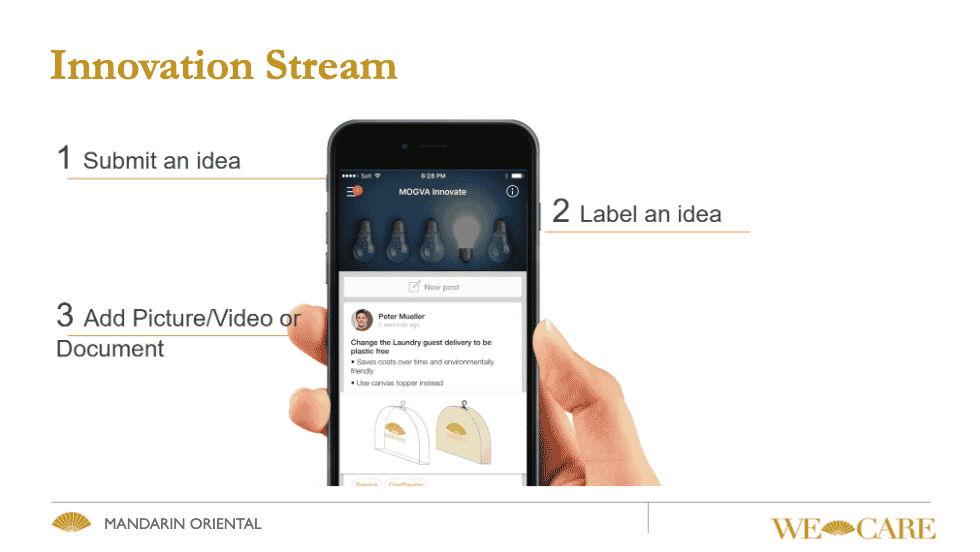
As a frontline-focused organization, the Mandarin Oriental Hotel Group also uses a mobile app to activate its organizational communication strategy.
With its Beekeeper app, the Mandarin Oriental Hotel Group:
- Distributes company communications directly to employees
- Provides digital access to important documents, like SOPs and checklists
- Encourages open feedback from employees
Are you ready to define organizational communication success for your business? Check out our Ultimate Internal Communications Toolkit for tips, tricks, and must-have resources.
Display ad title
Aenean et orci mollis, egestas diam sed, vestibulum neque. Nulla at dictum dolor. Phasellus posuere, nulla vel semper porttitor, diam urna.

About the author
Top