Your Corporate Communication Tools Could Be Leaving Out 80% of the World’s Workforce — Here’s What to Do About It
Ready to digitally enable your frontline workforce with mobile corporate communication tools they can use? Check out our white paper, “Digitization of the Frontline Workforce,” here!

Blah, blah, blah. Sometimes, that’s about as effective as workplace communication gets. If that’s the case for your company, it’s time for some soul searching — and better corporate communication tools.
When comparing tools for communication, find the fully-loaded workhorse with features designed to create a secure, fast, mobile communications network.
Learn how Beekeeper’s mobile-first productivity and collaboration platform is the corporate communications tool best suited for frontline workers.
What Are Corporate Communication Tools?

First, let’s start at the top. What is corporate communication? According to Gartner:
Corporate communication is the management and orchestration of all internal and external communications to create a favorable point of view and prompt desired behaviors among all stakeholders.”
Managing, creating, and distributing corporate communications can take up a lot of time and resources without the right platforms. Which is why organizations lean on corporate communication tools to help reach, connect, engage, and optimize internal and external communications.
Corporate communication tools connect with various internal and external audiences, such as employees, customers, investors, suppliers, etc. The channel in which companies communicate with these audiences depends on who they’re aiming to reach.
Here are a few examples of corporate communication channels:
- Company website
- Internal intranet
- Emails, newsletters, and bulletin boards
- Blog posts
- Emails, newsletters, and bulletin boards
- Press releases
- Town halls
- Mobile employee communication apps
When communicating internally with employees, organizations typically adopt tools built for desktops, mobile devices, or sometimes both. However, organizations with a frontline-majority workforce need to consider mobile-first corporate communications tools to reach employees that are constantly on the go.
Companies adopting new corporate communication tools and techniques to reach frontline workers should also consider these important internal communication trends:
- Employee empowerment is essential for post-COVID rebuilding. Digital workplace tools and resources empower team members to make their own decisions. Which can save time, resources, and money.
- Operational communication is in demand. Sharing company news one way is not enough for building a productive workforce. Employees need a tool that supports document sharing, development materials, and team collaboration in one place.
- Executives are championing digital workplaces in 2021. According to a KPMG study, 77% of CEOs said they would expand their digital communication toolbox in 2021. The goal is to establish more efficient communication and collaboration across employee groups – particularly with essential workers on the front line.
- AI adoption can measure internal communication impact. The use of AI is growing in the workplace. With the right employee communication tools, businesses can better track employee sentiment, impact, and employee engagement as a direct result of corporate communication.
- Companies are prioritizing the digital transformation. In the year following the COVID-19 pandemic, organizations are finally taking the digital transformation and connected workforces seriously. Beekeeper’s 4-step approach to digital transformation for frontline employees focuses on reaching and connecting, digitizing, automating, and optimizing employee processes.

Why Corporate Communication Is Essential For Business Success
Corporate communication is essential to managing successful teams and businesses. Why? Because corporate communications:
- Aligns employees with company mission and objectives
- Fosters company cultures
- Enables business growth
- Facilities crisis communications
- Engages all audiences the influence organization success
So, organizations must adopt the right tools for their workforce, size, and operational needs.
For example, larger corporations require secure, easy-to-implement software tools that transcend hierarchies. That means whichever platform they choose, it should facilitate top-down and bottom-up communications. Whereas smaller companies need operational functionalities that help busy employees get the job done quicker – such as shift schedules, document libraries, and group or 1:1 instant messaging.
Benefits To Adopting Good Corporate Communication Tools And Techniques
One essential perk of adopting online corporate communication tools is they help businesses overcome some of the most impactful workplace challenges. Those challenges can include:
- No or limited transparency from top-level executives
- Misalignment on business goals
- No access to a centralized platform with access to necessary workplace tools
- Reaching all employees, no matter their native language
- No established method for gathering employee feedback
Some other benefits of using a well-selected tool include:
- Connecting with employee groups that have historically been ignored
- Providing instant access to information employees need when they need it
- Enabling best practice sharing and team collaboration
- Improving workplace health and safety measures
Finally, online corporate communications tools support organizations moving to a flat workplace hierarchy, which results in:
- Decreased friction between employees, processes, and systems
- Streamlined workflows
- Improved workplace relationships and employee morale
- Refined workplace safety procedures
- Enhanced relationships with frontline employees with the ability to provide real-time
Examples Of Companies That Adopted Corporate Communication Tools – And Benefitted!
Ready to see the benefits of using the right internal corporate communication tools in action?
Let’s start with Mission Ridge Ski & Board Resort. The attractions company leveraged its Beekeeper app to maintain business agility and increased communication transparency throughout the global crisis. The business also uses the app to retain talent during the off-season, which reduces workplace costs associated with onboarding and training new employees.

There’s also IRP Meat and Seafood Co., who chose Beekeeper to connect frontline workers with sales reps to improve the customer experience. With direct communication between the two teams, the business is well-equipped to more efficiently meet customer expectations and generate higher revenues. The company also leveraged its employee app to keep furloughed employees informed and engaged throughout the COVID-19 pandemic in 2020.
10 Must-Have Capabilities For Internal Corporate Communication Tools
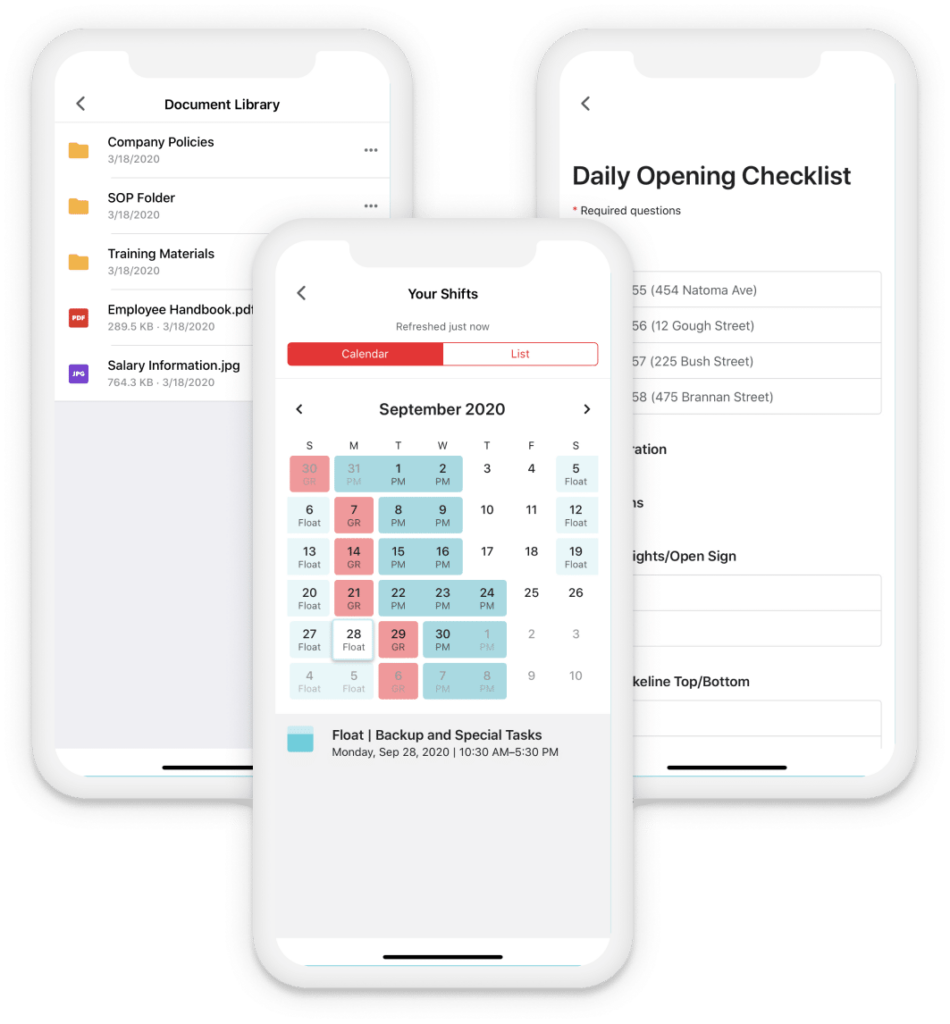
Here are the top 10 features companies need with adopting software tools for internal corporate communication.
1) Mobile-First Design
If your company is like most, you rely on a team of frontline employees to keep things moving along.
In fact, 80% of the world’s workers are mobile, unreachable by mainstream staff communication tools, like email.
A mobile-first strategy meets employees where they’re at: on the manufacturing floor, on the sales floor, making rounds in a hospital, or helping a guest at a hotel. Mobile-first staff communication tools are a must to reach every single employee.
That means everyone has a productivity and collaboration app that connects them to their company and their colleagues, allowing them to participate in internal dialogue.
Mobile functionality also:
- Creates an inclusive culture
- Knocks down internal silos
- Creates a cohesive team
- Increases collaboration
- Improves business performance
These might be elements that feel organic in an environment with desk-based workers. But in many companies, frontline employees are often disenfranchised, left to their own devices to do their jobs.
Corporate communication tools and techniques led by a mobile platform unify and engage an entire company.
2) Real-Time Messaging Is The Only Way to Go
Tools for communication are only as good as how fast they are.
Companies operate at warp speed these days. Avoid any enterprise software that can’t keep up.
Real-time communication can:
- Keep workers safe. Going back to IRP Meat and Seafood Co., the organization leveraged its employee app to keep workers updated on essential health and safety protocols during COVID-19.
- Ensure project completion. Real-time collaboration allows workflows to keep moving without breaks in communication. This allows teams to complete tasks faster for higher productivity.
- Speed up operational processes. Instant communication can be particularly helpful when time is everything. For example, an employee on the shop floor that needs a fast answer to a customer’s question can quickly ask their manager or co-worker for help.
Real-time messaging is a must when looking for online corporate communication tools. Pair it with mobile-first capabilities and now we’re talking! In every industry it’s imperative to be able to communicate with anyone, and everyone, in real-time.
On the manufacturing floor, real-time communication allows emergency hazards to be broadcast to employees and get them to safety. In a healthcare setting, time-sensitive issues are constant, and employees need staff communication tools that mirror the urgency of patient care.
And in the everyday business world of retail, banking, real estate, and most other industries, corporate communication tools with real-time capabilities allow up-to-the-second transmission for overall efficiency.
3) Security Is A Necessity
Security seems like a basic feature of any online corporate communication tool, but it’s not. Some companies use social media-style apps for company communications, but carrier pigeons would deliver more secure messages.
Social media messaging apps are highly susceptible to security breaches. And, in 2020, company security threats reached a new level. 24% of all cybersecurity attacks were aimed at retailers, and 560 healthcare facilities experienced ransomware attacks last year.
The best staff communication tools make security a priority with features like:
- A virtual, private cloud
- Multi-layer data segregation
- Full data encryption
- Built-in GDPR compliance
Every day, there’s a new headline about a massive security breach. Don’t let it happen inside your company.
4) Language Customization For Every Employee

If you’re doing right by your business, you’re growing a diverse team who contribute all kinds of great ideas to the mix. That means you might have employees who speak languages different from their colleagues.
Communication tools in business need to represent today’s workforce. In the United States, one in five people speak a foreign language, and there’s a growing demand for foreign-language speakers in the American workplace.
An employee app like Beekeeper’s communications platform has inline translation, allowing employees to send and receive messages in their preferred language.
Pro Tip: Reach out to your workforce to learn their language preferences. Make sure every employee is able to communicate for an inclusive workplace.
5) Collaborative Capabilities
Collaboration isn’t reserved for in-person meetings. For a company to be truly innovative, colleagues need the ability to work together, even if they are mobile. Some features to look for that foster collaboration in the workplace include:
- File sharing. Tools for communication that offer file sharing (like documents, audio, and video files) open an avenue for collaboration.
- Multiple communication stream capabilities. Create verticals of information that can be shared with a specific group or company-wide messaging.
- Directory. Know how to reach anyone in your company.
- Peer-to-peer messaging. One-on-one or group messaging through secure channels.
- Confirmation campaigns. Know when employees receive and read messages.
On a non-technical note, the simple act of providing workers with a social connection to their colleagues will inspire engagement and collaboration, especially for frontline employees who are connecting to their company for the first time.
6) All The Data You Need In One Place

To really get the most out of your corporate communication tools, it’s good to know how well they’re working.
That’s where an analytics dashboard comes in. It pulls back the curtain on how your team is interacting with the corporate communication tools you’ve chosen for them. It supports your leadership role by curating actionable data to accurately address engagement.
The dashboard tracks real-time data on engagement and productivity. Communication tools in business should also have a survey feature that allows management to directly communicate with employees. The dashboard can compile responses and deliver an analysis.
It shows where operations are running efficiently, and areas where there might be gaps in workflows that need attention.
Tracking engagement is necessary because:
- Disengaged workforces cost companies astounding millions of dollars per year.
- There’s a shortage of talent right now. It’s vital to develop strategies to keep employees productive and satisfied in their work and the company.
To develop actions and strategies that accurately target what your workforce needs, you need the information and participation data that an analytics dashboard provides.
Pro Tip: Don’t know workforce stats? Send out a survey asap to discover just how engaged your employees are. Then, take action.
7) Digital Signage As An Added Bonus
Digital signage is an added perk for staff communication tools. Digital signage—high-visibility displays and monitors throughout a workplace—extends the reach of regular communication streams.
As employees move around on the job, there are times that they might not look at their phones. Strategically-placed digital signage can alert them of any urgent messages or all-staff notices. It’s also a great place to display employee recognition for everyone to see!
Messaging can be curated from the content on the bigger platform and scheduled in advance on a rotating feed. It’s an added security measure that all information reaches everyone.
8) Communication Tools In Business Need An Agile Platform
Corporate communication tools should not be one-size-fits-all. Cross those options off your list immediately.
Communication tools in business should be adaptable to the way a company works. How?
- Integrations. Tools for communication should integrate seamlessly with your legacy programs. When different operational management systems and applications are on the same platform and able to talk to one another, workflows are open and seamless.
- Custom-built. No two companies operate in the same way. Communication tools in business should support every company’s operational needs. A platform should be able to undergo a little in-house design to fit into pre-existing systems.
9) “Employee First” Features
Online corporate communication tools should prioritize employees with features that support their ability to do their jobs.
This means:
- Align an entire staff and get them on the same page with the company’s mission and goals.
- Increase engagement across the board. To run a well-oiled machine of a company, every employee should be included and given an opportunity to participate.
- Provide equal access to information and communication tools. No matter if it’s providing fast access to important information or reaching all employees in their preferred languages, every employee should be the priority.
Tools for communication that help a company achieve these goals will support an autonomous workforce with features like Shift schedules, which gives employees more control over when they work. They’ll open up two-way communication that enables employees to initiate a dialogue and increase their participation. Employees need a voice and autonomy to be truly engaged in the function of a company. Find corporate communication tools and techniques that support them.
10) HR Tech For Higher Retention
The heart of any organization is the human resources department. Hiring, firing, recruiting, payroll—if it’s an employee-related issue, it’s up to HR to deal with it.
Corporate communication tools should include HR tech to eliminate repetitive processes, automate workflows, reduce paperwork, and free up the HR team time to do more people management so they can focus on increasing retention.
Software tools for internal corporate communication can help HR with features such as:
- Employee onboarding. All paperwork can be done online, even signatures.
- Training. Employees can use their app to play training videos and get up to speed on employee manuals.
- Paperless payroll. Digital payroll reduces paperwork for HR and also allows employees to access their information directly.
- Benefits communication. With automated reminders, confirmation campaigns, and employee surveys, benefits communications have never been easier.
BONUS: Digital Forms And Task Management Keep Operations Flexible

Beekeeper recently launched new forms, tasks, and document features that create smoother operational transactions in the workplace.
Why? Because paper-based processes cost businesses time and money. With Forms in Beekeeper, employees can complete necessary documentation in the employee app.
Here are some ways our customers are using Forms to support their frontline employees:
- Digitizing employee order and equipment maintenance forms
- Streamlining name badge order forms and PTO requests
- Converting room cleaning and opening shift checklists
Additionally, task management is something we all struggle with – no matter if we’re in the warehouse or managing employees. With Beekeeper’s Task tools, employees are now able to create to-do lists for themselves right on their mobile devices. Or, they can easily keep track of actions assigned to them by their managers.
Tasks help dispersed teams stay organized, particularly for situations like:
- Equipment maintenance
- Employee onboarding and training
- Health safety measures
- Room cleaning assignments
- Shift scheduling changes
- Or simply remembering to call someone back
These optimizations are another way Beekeeper helps make your business run smoothly. As you continue your search for online corporate communication tools that support your needs, make sure you’re on the lookout for these features that:
- Reduce time spent on paper-based tasks
- Create a more seamless workplace experience
- Prioritize employee health and safety with fewer physical interactions
- Connect communication and operational support in an easy-to-use platform
Communication tools in business must-have features that benefit every employee, team, and department within an organization to be most successful.
In other words, you need a Renaissance platform.
As more industries operate on a global scale, at a faster speed, and with a more diverse, mobile workforce, they need corporate communication tools that support every element of their operations. That means creating a digital connection to every employee, no matter where they are.
Most Frequently Asked Questions
Corporate communication is the management and orchestration of all internal and external communications to create a favorable point of view and prompt desired behaviors among all stakeholders.
About the author
Top