20 Best Practices for Cultivating Frontline Employee Engagement
Recent reports cite that only 31% of employees are engaged in their workplaces. Yet, 71% of executives believe employee engagement is critical to organizational success.

Recent reports cite that only 31% of employees are engaged in their workplaces. Yet, 71% of executives believe employee engagement is critical to organizational success.
For frontline workers, employee engagement is further impacted if team members lack:
- Communication and collaboration tools
- Feelings of empowerment
- Connection to the business’s broader missions or purpose
This is a wake-up call for companies to re-evaluate employee engagement with their workforce.
When employees lose faith in their purpose or feel company morale begin to dip, they are likely to mentally or emotionally check out. For office and frontline employees alike, maintaining a strong connection to their role within their respective workplaces becomes much easier with a few important best practices in place.
Here are 21 best practices for cultivating employee engagement and helping your frontline workforce thrive.
1. Establish a Performance Check-In Process
After a candidate accepts an offer, it’s best practice to establish clear employee engagement expectations as they onboard.
While it is crucial to make an early first impression regarding employee engagement expectations, it is equally important to remain consistent with whatever performance check-in process you put in place. The metrics for success should be clearly paved, and some ways to do this are to:
- Carve time out each week for a one-on-one meeting between employees and managers
- Distribute regular pulse surveys via a mobile collaboration platform
- Ask that employees aim for certain optimized key results over the course of a fixed period of time
2. Mobilize Employee Engagement

To ensure effectiveness and maximize user stickiness, an employee engagement platform should absolutely be mobile-first. Beekeeper users can engage several tactics to make the most out of mobile digital enablement:
1. Automated notifications increase employee participation within the employee collaboration app. They also save time by automating the more repetitive operational aspects of company-wide communication.
2. Campaigns can increase employee engagement thanks to their real-time information distribution. No matter if it's emergency alerts, policy changes, scheduling communications, or logistics updates, campaigns can be sent immediately or scheduled for a future date.
3. Deploy Employee Surveys Regularly
At Beekeeper, we are big believers in the power of consistent employee engagement surveys. Two main types of surveys, pulse surveys, and annual surveys, each present a way to garner feedback about employee engagement and satisfaction.
Pulse surveys are a short-form way of garnering quick, real-time feedback, asking a small number of questions (ideally 1 to 10) on specific issues regularly.
Annual surveys happen once a year to help define yearly goals. Deploying these surveys digitally through an operational communication platform helps attain this data quickly. This also encourages high levels of participation among your workforce.
4. Reach All Employees With Inline Translations
Businesses are going global – which means workforces are diversifying. Companies unable to connect and communicate with employees in their native language likely experience lower engagement levels.
Breakdown one of the most common communication barriers with inline translation technology. With seamless translations of your company’s most critical information, you’re prioritizing:
- An inclusive workforce
- Employee health and safety
- Quicker knowledge sharing
5. Vocalize Your Appreciation Of Everything They Do
Frontline workers are the heart of your business. They are on the production line, stocking shelves, keeping warehouses ticking, and working directly with customers.
With a mobile communication platform, management can widely recognize these essential workers for showing up, suiting up, and keeping their business moving.
6. Connect Frontliners With Your Mission
Company mission statements are great on paper. But, in order to deliver on it, employees need to:
- Know it
- Align with it
- Understand how they impact it
If frontline employees cannot connect their value to business objectives, their satisfaction, motivation, and engagement will be impacted. Companies can stay ahead of this by:
- Communicating important news and information
- Reinforcing their value
- Tying their roles back to the mission during onboarding, training, and performance evaluations
7. Make Life Easier For Them
Frontline workers are busy. So, the easier you can make their work lives, the better.
When selecting your mobile collaboration platform, you must have a Home screen that provides customizable shortcuts that are most important to the employee. That way, employees can spend more time doing virtually anything else and less time looking for what they need.
8. Empower Employees To Feel Empowered
Employee empowerment is a powerful tool that can better engage workers and enhance business performance. A recent Harvard Business Review report found:
- 87% of respondents believed their company would be more successful when frontline employees are empowered to make decisions
- 72% saw an increase in productivity simply by empowering frontline workers
How do you empower employees? By giving them access to information, materials, and documents to make well-informed decisions.
9. Prioritize Their Mental Wellbeing

The global pandemic brought frontline workers’ mental health to the forefront. Which is where workplace mental wellbeing will likely stay.
In 2020, 53% of companies activated special mental health programs due to COVID-19. Going forward, companies will integrate long-term support for employees if they haven't done so already.
When employees feel their mental health is a priority, they are more likely to:
- Stay engaged
- Remain loyal
- Go above and beyond
10. Centralize Their Digital Tools

Today, 96% of young workers in the U.S. own a smartphone, and 22% of younger adults rely solely on smartphones to access the internet.
This means the future of the frontline workforce is more connected than ever. As a result, the landscape for workplace technology is expanding quickly.
Businesses should help their frontline employees filter through the workplace technology noise by activating a centralized communication platform.
With a one-stop-shop digital workplace, frontline employees can:
- Receive the information they need to do their jobs
- Access their other workplace tools and applications
- Connect with their colleagues in real-time
11. Invest In Training and Development
Workplace training and development are essential to employee engagement.
79% of frontline employees believe more frequent learning opportunities would help them feel more engaged at work.
But for frontliners, educational opportunities should be flexible and mobile-friendly. One way to do this is to digitize training materials and hosting them in a Document Library. That way, employees can access their training information whenever and wherever they can.
12. Provide Open Access To Critical Information
Using a mobile communication platform is the best way to engage frontline employees in company news. Platforms like Beekeeper provide instant access to critical information, including company alerts, health and safety changes, and crisis communication.
13. Don’t Waste Employees’ Time
Frontline workers spend an average of 3 hours per week looking for information to do their jobs. And frontline managers spend about 60% of their time coordinating messages between corporate and their employees.
Wasting valuable time is frustrating for everyone and can impact an employee’s overall satisfaction. Make life a little bit easier for them by communicating and engaging with them through a channel that is most effective for them.
14. Encourage Team Collaboration
Collaboration and teamwork help build workplace cultures employees want to be a part of. According to Gusto, 54% of employees say a strong sense of community kept them at a company.
A great way to build frontline collaboration is through digital workplace collaboration tools.
15. Tell Them They Are Valued – Because They Are
These days, everyone is doing more with less – especially frontline workers. Which is why it’s important for management teams to remember to thank them for their hard work.
Executives can post thank you messages right on their mobile collaboration apps. Or, you can create a quick video that will go along way. Check out our CEO’s employee appreciation video for inspiration!
16. Incorporate Their Experience In The Employee Experience
A positive employee experience can make or break someone’s time with your company. Key influencing factors of the employee experience are:
- Culture
- Communication
- Development
- Environment
However, what might be important for some may be less so for others.
Our advice: take an inclusive approach to create the employee experience. Base it on real experiences, and use direct feedback to make adjustments where needed.
17. Prioritize Their Health and Safety, Always
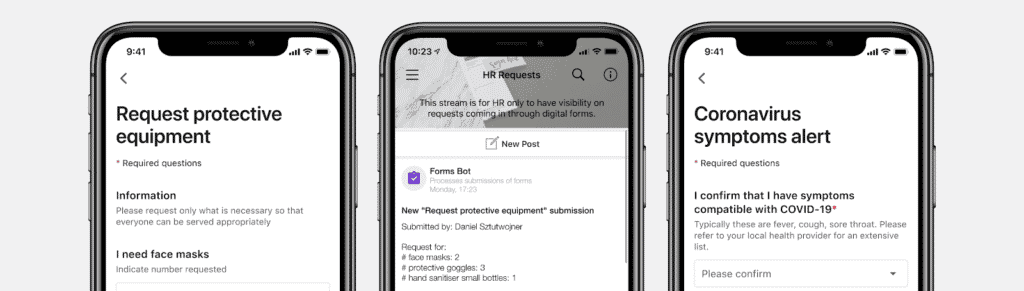
Thanks to 2020, employee health will remain at the top of workplace conversations for quite some time. Not only because it a vital workplace practice – but because employees want to know businesses care about their safety.
Companies that treat employee health and safety as a fad will risk their employee’s loyalty. Remember to keep it at the forefront of your conversations and recognize those that go the extra mile to create a safe environment.
18. Breakdown Communication Barriers Impacting Their Productivity
Communication barriers are silent killers of employee engagement and productive business performance. According to a recent survey, consequences of poor communication at work include added stress on employees, failure to complete a project, and loss of sales or clients.
However, these barriers can easily be broken down with more efficient communication and flexible tools.
19. Celebrate Diversity and Inclusion
Diversity in the workplace is the cornerstone of a thriving business. As such, an inclusive culture is one of the most sought-after factors when selecting a place of work.
Companies that celebrate their diverse workforces are more likely to attract, retain, and engage their talent.
20. Show Them They Matter
Our last tip is to put as many of these best practices into place. Why? Because they each show frontline employees:
- They matter
- They are valued
- They are essential
That support will undoubtedly motivate them to stay engaged and connected for the long-haul.
Want more insight into the future of work for frontline employees? Fill out the form below to download our 2022 Frontline Trends Report today!
About the author
Top