The Next Normal: A 4-Stage Recovery Roadmap for Heavy Industries
What will the world look like when we emerge from this global pandemic? The truth is, no one knows for sure. With this uncertain future, leaders should create an agile infrastructure to prepare for a different reality than the one we knew—the next normal.

Table of contents
What will the world look like when we emerge from this global pandemic? The truth is, no one knows for sure. With this uncertain future, leaders should create an agile infrastructure to prepare for a different reality than the one we knew—the next normal.
COVID-19 has disrupted business operations in almost every country and across every industry. As government leaders and scientists determine how, and when, it’s safe for businesses to start back up, companies must be prepared with a digitally-supported solution that allows for flexibility. For heavy industries, restarting global supply chains and reinventing the workplace will evolve over time.
We will likely see several iterations of normalcy in the months and years to come. Companies will need to adapt and evolve with this uncertainty, and find new ways to overcome operational challenges while navigating an unstable economic landscape at the same time.

The one thing that’s certain? To navigate this post-COVID world, companies must master the art of pivoting, being flexible, and creating organizational resilience.
Here are the four recovery stages for heavy industries as they reemerge, transition, and navigate the next normal.
Stage 1: Put Out Fires
For many heavy industries, the focus right now is removing roadblocks and readjusting operations management. Companies need to find new resources and rebuild workforces to improve demand responsiveness or pivot their production in a new direction altogether.
In this first stage, heavy industries will need to rebuild operations and recover revenue. This should be supported through adopting digital tools that can get the organization up and running quickly, and on the road to the next normal.
A digital workplace will allow companies to instantly share updates and store documents in a mobile accessible format that’s optimized for the frontline workforce.
If you’re a leader of a heavy industry company, digital communications tools can support your organization as you:
- Make rapid changes as needed to stay in business
- Comply with new regulations
- Implement new safety protocols
- (Re)train your workforce
Stage 2: Prioritize
As companies get back to work, they’ll throw their original playbook out the window and use this fresh start to change direction and prioritize new strategies.
According to a recent survey conducted by Beekeeper, 22% of operations managers surveyed said that creating or adapting their business continuity plan was a top priority.
This will become an even greater priority as companies begin to rebuild.
Heavy industries can set themselves up for success by setting new strategic priorities for a post-COVID business landscape.
- Sharpen focus: Funnel your resources into strategies with proven ROI that will drive revenue growth and speed up your recovery.
- Start small: Leaders should take baby steps initially by focusing on a small set of strategic priorities that they re-evaluate and adjust throughout the year to adapt to evolving trends.
- Reallocate resources: The first step towards being able to adapt quickly to change is to strategically funnel your existing resources into the right places at the right time.
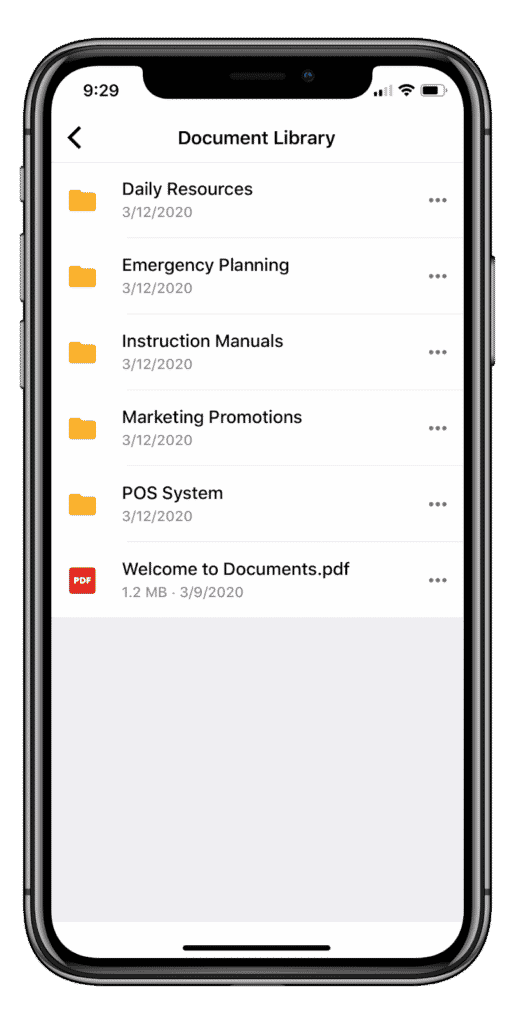
- Digitally enable your frontline workforce: Frontline worker buy-in, participation, and engagement will be necessary for heavy industries to achieve their business objectives going forward. Communication tools can digitally enable these essential workers by building confidence, reducing operational friction, and access to information through features like a document library.
Stage 3: Pivot
Even when the peak of the crisis has passed, there will be an indefinite period of market fluctuation and varying degrees of consumer demand. This will require companies to incorporate flexibility into their business models in order to roll with these waves of market fluctuations.
In a post-COVID era, flexibility will offer even more of a competitive advantage than it did before. Analysts are predicting that agile, mission-driven organizations will prevail over ones with rigid hierarchies and static operational infrastructures.
Digital communication tools can help companies pivot, restructure, and realign.
- Real-time communication can increase business agility. Real-time knowledge sharing through a two-way communication system can enable companies to adapt quickly to change. A bottom-up leadership approach will be an integral part of the next normal in heavy industries.
- Mobile-first is the future of workplace communication in heavy industries. A tool with built-in templates, chatbots, and two-way communication capabilities will keep essential frontline workers informed of business decisions in real time.

Stage Four: Persevere
Finally, business leaders need to create a culture of perseverance and infuse long-term organizational resilience into their workforce and business model. How well your organization handles operational shockwaves and future economic downturns will be key to your company’s long-term success.
To become more resilient entities, companies in the heavy industry sector must develop the ability to:
- Slash operating costs as needed
- Build strong and reliable supply chains
- Create well-developed succession plans
- Adopt a secure internal communication platform that enables bottom-up communication
Resiliency and agility will enable heavy industry businesses to adjust to the heightened government intervention and oversight that will last for the foreseeable future.
While exact operational changes that need to be made are yet unknown, the impact of COVID-19 is reverberating around the world, forcing companies to quickly adapt to the next normal as they begin to pick up the pieces.
At the center of how companies function will be the inclusion of all employees in operational management. To persevere, everyone must be on the same page, aligned towards a common goal. Employees at every level of the organization must work together to build a flexible and agile organization. Not only will these characteristics define the next normal, they’ll help build more stable, resilient businesses from here on out.
Introducing the Next Normal Package
To help businesses adapt fast to the next normal, we’re offering a complete Next Normal package. This offer includes a fully loaded suite of tools, templates, and resources you need to help your business recover and ramp back up.
Our Next Normal Package includes:
- The Recovery Roadmap complete with a planning template
- 48-hour product rollout to your entire company
- 3 pre-configured news streams for:
- Cleaning
- Office management
- Continuous improvement and quality
- Document library
- Survey templates
- Leadership check-in
- Training quiz
- Campaign templates
- Status update and looking ahead
- Forms and checklists
- Cleaning inspection, PPE request, self-quarantine confirmation, work from home registration, register visit to the business location, emergency shutdown checklist
- Out-of-the-box coronavirus chatbot
- Shift schedules
Get our Next Normal Package to learn how to build a digitally-supported agile and resilient organization.
About the author
Top



_en_opt.webp)