Top 5 Frontline Retention Strategies to Engage Hourly Workers
Picture this: your business is finally up and running again after a global pandemic wreaked havoc with your operations for almost three years.

Picture this: your business is finally up and running again after a global pandemic wreaked havoc with your operations for almost three years.
Customers are flooding in…but you can’t find workers to fill the shifts. This isn’t just a what-if scenario. Companies are struggling with frontline retention, losing workers to the Great Resignation, burnout, and retirement.
Learn the 5 Employee Retention Strategies You Can’t Afford to Ignore
People are quitting at record rates, about four million a month, even as states and countries are announcing the end of the pandemic. And many of those quitting are frontline workers, a demographic that makes up more than two billion people around the world in industries like retail, hospitality, manufacturing, construction, and healthcare.
According to the U.S. Chamber of Commerce, there are more than 10 million job openings but only 5.7 unemployed people.
Companies are scrambling to find new talent and create strategies to keep the ones they have. But the answer might be right in front of them: leveraging digital solutions to build (and keep) a thriving workforce.
Here are our top tips for retaining frontline workers.
Understanding the Unique Needs of Frontline Workers
This era has been dubbed The Great Resignation due to the number of workers quitting their jobs, most of them in frontline careers. 50% of hourly workers quit within the first four months. But believe it or not, this mass exodus from their jobs has been building for a long time. Then the pandemic just accelerated the momentum.
Frontline workers have multiple reasons to be unhappy.
- Burnout. It’s been a long three years, piled on top of years of little recognition, long hours, low pay, and little flexibility. Workers are ready for new opportunities with more to offer.
- No technology. Today’s frontline workers want what every other worker gets: workplace tech. But companies only spend 1% of their digital budget on connecting and engaging their frontline workforce.
- Disconnected. Without a desk or some kind of dedicated space to themselves at work, frontline teams don’t have computers or company email. Pair that with the lack of technology offered to them and frontline workers feel disconnected from their companies, colleagues, and their managers, a critical relationship when it comes to frontline engagement.
- No future at the company. Frontline workers often feel like they’re not getting ahead professionally. They do the same job day in and day out without the promise of future opportunities. They want training and tools to learn more, grow, and move ahead in the company.
All too often leaders manage their entire staff the same way, without realizing they are leaving frontline workers out. They often lean towards desk-based applications and programs and communicate via email. The first step in retaining frontline workers must be understanding their unique needs which are defined by the way they work.
In general:
- They’re mobile and don’t have a desk
- They don’t have a company email
- They most often work by shift rather than 9-to-5
- They are often customer-facing employees
- Frontline workers have valuable insights into a company that others don’t
The first step in retention for frontline staff is to recognize that frontline workers are not like their desk-based colleagues. Then, leaders need to adopt an inclusive strategy that connects every single person in an organization. Leaving frontline workers out of communication is a missed opportunity for feedback and insights that can help a company succeed.
The solution?
A mobile-first communication strategy. That means utilizing a digital workplace solution that any and every employee can use on the device of their choice: a smartphone, iPad, laptop, or desktop computer. Using a dedicated workplace app can streamline workflows and create a centralized communication hub that people can tap into no matter where they work. It takes into account the different ways people work, where they work, and when they work.
Why Frontline Retention is So Important
There is no shortage of reasons why the retention of frontline staff is so important. Let’s start with the basics: a happy, engaged workforce leads to higher productivity and profits and helps companies succeed and grow. Frontline workers are the backbone of industries and the people who do most of the physical work for companies in the global economy.
Pro tip: Know your numbers! Calculate your turnover rate so you know exactly how many people leave your company every year and what it’s costing you.
A few other reasons frontline workers are critical to your company:
- Frontline workers are your brand ambassadors. They are the face of the company and build relationships between you and your customers. Not only will frontline workers provide better service when they’re happy in their jobs, but customers are loyal to companies often because of the employees they build a rapport with over time.
- Business continuity relies on institutional knowledge. Frontline workers often have valuable information into how a business runs from the ground up. High turnover creates fragmented information flows and institutional knowledge is lost between former employees and new hires.
- Turnover is expensive. Even the cost of investing in digital tools to connect and engage frontline workers is less expensive than what it takes to recruit, hire, and onboard new workers.
- Productivity suffers when a company needs to take time to fill a vacant position. Workflows are disrupted, other workers have to take up the slack, and innovation stops.
Ultimately, frontline employee retention should be important to leaders because they should genuinely care about their staff and want to build a culture that makes people happy and want to work there.
5 Tips For Effectively Retaining Frontline Workers
Now that you know why frontline workers are leaving, how do you get them to stay? Here are the top five tips to boost employee retention.
1. Give Frontline Workers a Say
Frontline work has long been seen as hourly punch-in, punch-out jobs. But frontline employees are the eyes and ears of the operation. Production workers in a manufacturing organization know how to physically make a product. The hotel staff knows the little details that increase guest satisfaction. They want to share what they know! Contributing their insights will empower them, and will give you valuable information that will help your company perform better.
2. Establishing a Sense of Community
Sure, people come to work to, well, work. But that doesn’t mean they have to simply do their jobs without socializing. People want to like where they work, they want to make friends, and they want to have a community. These are key ingredients to keeping employees with your company. Make sure there’s a culture of camaraderie and support. Create opportunities during the day or events outside of working hours. Use a frontline success system to introduce new hires, celebrate a worker’s new child, or wish them a happy birthday.
3. Developing Career Paths
One of the top reasons frontline workers leave is the lack of career advancement opportunities.
McKinsey found that 70% of frontline workers have applied for jobs to move ahead in their companies, but only 25% have received promotions.
After gaining a solid skill set in their current positions, build on that by providing frontline workers with the next level of knowledge they need to move ahead in your company. They will bring a deep insight into your operations to their next job and will pass that along to the workers they manage. Invest in training tools and content that you can deliver over a mobile workplace app so employees can gain the skills they need to strengthen their experience and give them a reason to stay.
4. Maintaining Flexibility
Work is not the same as it once was. Desk-based workers have more fluidity in how, when, and where they do their jobs. While frontline teams often have to show up on-site and don’t work remotely, they still want a more flexible work life.
This means they want more flexible schedules and greater autonomy over their hours. Having the ability to structure a life that satisfies their career and personal needs lowers the stress level over things like finding childcare and makes them happier at work. Mobile-first shift scheduling tools are a great way to solve this problem. Workers can have more control over their hours (which can also reduce absenteeism rates.)
5. The Basics: Pay and Benefits
Take a look at what your company offers frontline workers. Then do a wage comparison in your area. You’re competing for talent against other companies in one of the fiercest labor markets in history. Are your wages as good, if not better, than others in your industry? Target is beginning to bump up its minimum hourly wage to $24. They also have 401Ks for employees and offer educational opportunities. It might seem like a big investment, and it is. But again, you’ll either spend money on your employees to keep them engaged and happy, or spend money on the costs of high turnover (including recruiting and onboarding, but also the costs of additional problems like lost productivity and slower time-to-market.)
Using Technology And Digital Solutions To Improve Frontline Employee Experience
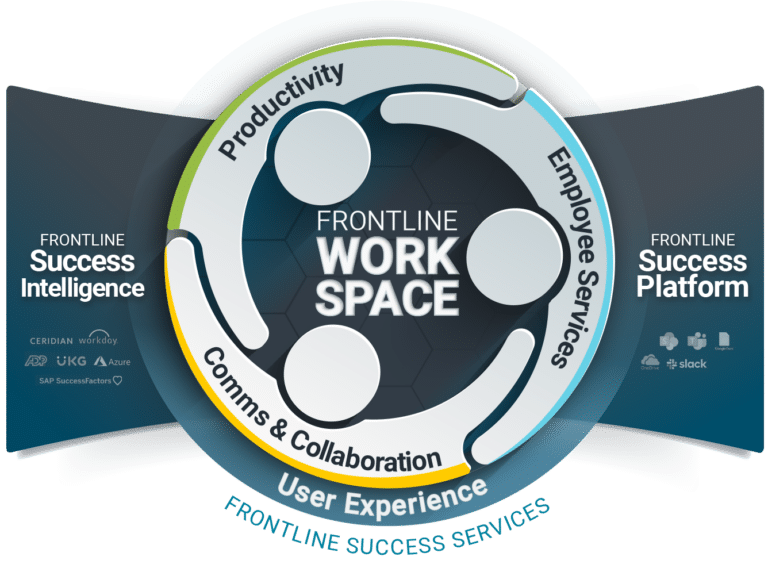
Whether or not employees stay or go comes down to one thing: the workplace experience. It’s the sum total of ingredients like the work environment, culture, the relationships they have with managers and colleagues, the support and training they receive, and feeling included by the company and aligned with the mission.
This is all possible with the right digital solutions. Companies that adopt a mobile-first communication strategy and tools have a competitive advantage when it comes to the retention of frontline staff. What does that scenario look like? It means companies use a workplace app through which information and communication flows.
But even though it’s a mobile-first strategy, it’s an all-inclusive approach. Office-based teams can access the tool on their computers while frontline workers can use their smartphones or iPads. A mobile strategy is all about leveling the connectivity playing field and creating a seat at the table for frontline teams to engage, connect, and grow.
Companies can leverage this technology to improve the frontline experience in so many ways:
- Knowledge is power. A mobile solution with a document library allows frontline workers to have access to the information they need to do their jobs. It might be an SOP that guides them through a specific process or numbers they need to answer a customer’s question. Entrusting them with information also makes them feel valued in the organization.
- Workers don’t want to get bogged down with menial and manual processes. A tool like Beekeeper can automate repetitive tasks and forms (think: onboarding and open enrollment) so they can focus on more productive work.
- A mobile tool enables two-way communication. That means frontline workers finally have a voice, a way to share their insights and feedback and contribute value to the organization. Encourage them to contribute and connect. Use the tool to ask frontline workers directly what they want out of their workplace environment and experience so you know exactly what they want to get them to stay.
- Technology is a competitive hiring advantage for companies. Today’s generation of workers has grown up with technology and they want to work for digitally progressive employers.
The competition for talent is heating up. Companies need to prioritize frontline retention strategies now, or lose workers to companies that have adopted the right digital solutions, built the right culture, and taken the right steps to attract and retain frontline talent.
About the author
Top



_en_opt.webp)