Enterprise Content Management System: Boost Efficiency
Demystifying Enterprise Content Management Systems
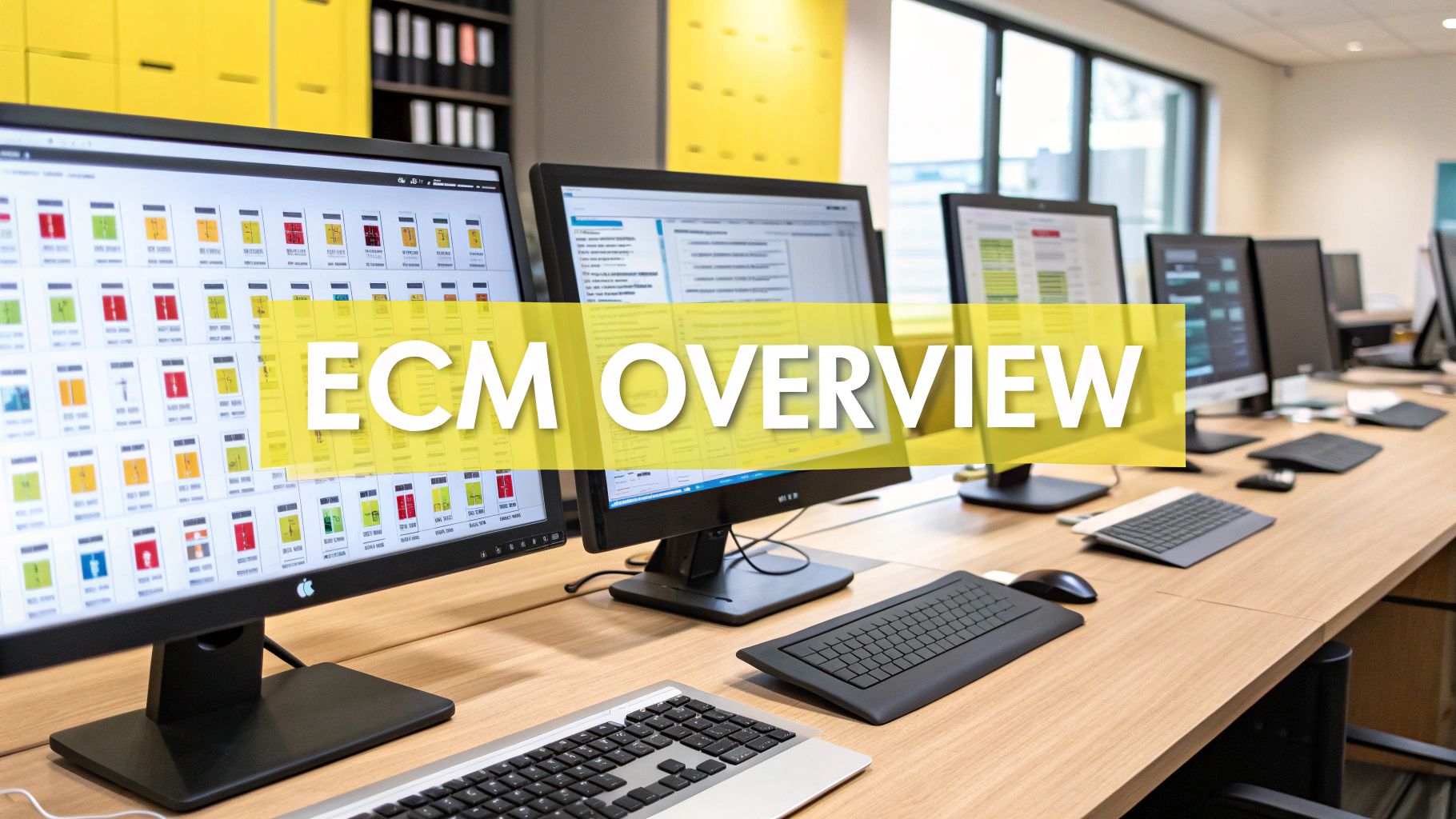
An enterprise content management system (ECM) is much more than a simple file storage system. It's the central hub for all of an organization's information, connecting people, processes, and data in a cohesive manner. Think of it as a dynamic and evolving library that houses not just documents, but a wide variety of content, including images, videos, and even social media posts. This centralized system organizes everything, making it easily searchable and readily accessible to authorized users.
This efficient access translates into significant time savings for employees. Instead of wasting valuable time searching for information scattered across numerous drives and platforms, they can quickly locate exactly what they need, precisely when they need it.
Key Components of an ECM
Several key components distinguish a robust ECM from basic document management tools. One crucial feature is version control. This functionality tracks all changes made to documents, ensuring everyone works with the most current version, eliminating confusion and promoting accuracy. Workflow automation is another key element, streamlining processes like approvals and reviews. This automation reduces bottlenecks and significantly boosts efficiency. Finally, strong security features are paramount, safeguarding sensitive information through access controls and encryption, thereby protecting against unauthorized access and potential data breaches.
ECM vs. Simple Document Management
While both ECM and simple document management systems deal with documents, their capabilities differ significantly. Basic document management focuses primarily on storage and retrieval, functioning much like digital filing cabinets. ECM systems, however, go far beyond simple storage. They integrate content into core business processes, facilitating collaboration, improving decision-making, and driving overall organizational efficiency. Furthermore, ECMs support a wider range of content types, creating a richer and more interconnected information environment.
The Growth of ECM
The growing importance of efficient data management is evident in the significant growth of the ECM market. Valued at approximately USD 39.46 billion in 2023, the market is projected to reach USD 131.11 billion by 2032. This represents a substantial compound annual growth rate (CAGR) of about 14.27% between 2024 and 2032. This expansion underscores the increasing recognition of ECM's vital role across various industries. Find more detailed statistics here
Real-World Applications of ECM
Forward-thinking businesses are leveraging ECM to transform their operations in several key ways. One major benefit is the elimination of information silos, which often hinder collaboration. By centralizing content, ECM makes information accessible across different departments, thus improving communication and knowledge sharing. This fosters a more connected and informed workforce. Additionally, ECM creates searchable knowledge bases, capturing institutional memory and preventing the loss of valuable information when employees leave. Finally, ECM systems support regulatory compliance by ensuring proper document management and comprehensive audit trails.
The Business Impact of Intelligent Content Management
Implementing a robust enterprise content management (ECM) system is more than just organizing files. It directly impacts a business's bottom line. By streamlining processes and centralizing information, companies can achieve significant efficiency gains and cost reductions. This positive effect transforms how businesses operate and compete.
Streamlined Workflows and Increased Productivity
One of the most immediate advantages of an ECM is workflow optimization. Automating routing and approvals eliminates manual tasks, minimizing delays and allowing employees to concentrate on more strategic activities.
Imagine a marketing team requiring numerous approvals for a campaign. An ECM automates this, routing materials to the right people, tracking progress, and removing the need for lengthy email threads or physical signatures. This results in quicker launches and a more productive team.
Enhanced Regulatory Compliance
Maintaining compliance in regulated industries is often complex and expensive. An ECM simplifies this by offering a central repository for all documents, ensuring version control and facilitating audit trails. This minimizes non-compliance risks and transforms regulatory compliance from a burden to a strategic asset.
Readily available documentation streamlines audits and demonstrates a commitment to standards. This builds stakeholder trust and can open doors to new market opportunities.
Breaking Down Information Silos
Information silos hinder collaboration and innovation. An ECM breaks down these barriers by providing a single source of truth for company information. This enables seamless cross-departmental access and information sharing, promoting collaboration and driving innovation.
For example, if sales needs the latest product specs from engineering, an ECM provides easy access. This facilitates communication and more informed customer interactions. Understanding best practices is essential for ECM success. Learn more by exploring these document management best practices.
Improved Decision Making
Accurate, readily-available information is crucial for informed decision-making. An ECM empowers employees with the right information at the right time, contributing to better decisions.
By consolidating information, an ECM provides a holistic view of operations, enabling data-driven decisions that improve efficiency and fuel strategic growth. This directly strengthens the bottom line and enhances market competitiveness.
To better illustrate the benefits across different business functions, let's examine the following table:
ECM Benefits Across Business Functions
A comparison of how different departments benefit from enterprise content management systems
This table highlights how an ECM can positively impact different departments by optimizing processes and improving access to crucial information. These improvements translate to tangible ROI metrics, showcasing the value of ECM implementation.
Enhanced Customer Experience
The impact of an ECM extends to the customer experience. By giving employees quick access to customer data, an ECM facilitates personalized, efficient service. This results in faster response times, better issue resolution, and greater customer satisfaction.
For example, customer service representatives can quickly access complete customer histories, including past interactions and purchases, leading to more personalized support. This strengthens customer loyalty and contributes to long-term business growth.
Cloud Vs. On-Premises: Making The Right ECM Choice

Selecting the right Enterprise Content Management (ECM) system, whether cloud-based or on-premises, is a pivotal decision for any organization. This choice has a ripple effect, impacting budget, control over data, security protocols, and overall system flexibility. Let's delve into the core differences between these two deployment models to help you pinpoint the best fit for your specific needs.
Cloud-Based ECM: Agility and Scalability
Cloud-based ECM systems excel in agility and scalability. Hosted on the provider's servers, these solutions eliminate the need for significant upfront investments in hardware and IT infrastructure. This allows for rapid deployment and effortless scalability as your business grows.
Imagine a rapidly expanding company needing to accommodate surging data volumes and a growing user base. A cloud-based ECM can readily adapt to these changes without requiring major infrastructure overhauls. Furthermore, automatic software updates are a common feature, freeing up your internal IT team to focus on other strategic initiatives.
On-Premises ECM: Control and Customization
On-premises ECM deployments prioritize control and customization. Installed and maintained on your organization's servers, these systems offer extensive tailoring to match specific business processes and seamless integration with existing IT systems.
This level of control comes with added responsibility. Your organization assumes the mantle of maintenance, security, and upgrades. This approach often appeals to organizations with stringent regulatory requirements or those operating in sectors with heightened data security concerns.
To understand the core differences between cloud-based, on-premises, and hybrid ECM solutions, let's examine the following comparison:
The table below, "Cloud vs. On-Premises ECM Comparison," provides a detailed overview of the key decision factors:
This comparison highlights the trade-offs inherent in each approach, emphasizing the importance of aligning your ECM choice with your specific organizational context.
Cost Considerations: Beyond The Obvious
While cloud solutions may appear more budget-friendly initially, a comprehensive cost analysis requires considering the long-term Total Cost of Ownership (TCO). Recurring subscription fees, data migration expenses, and potential integration costs can accumulate over time. Conversely, on-premises solutions entail a larger upfront investment, but ongoing costs can be lower, particularly for large-scale deployments. Don't overlook hidden costs such as training, customization, and ongoing maintenance, which apply to both approaches.
Security Implications: Data Protection and Compliance
Security remains a paramount concern. Cloud providers typically invest heavily in robust security infrastructure and adhere to stringent data protection standards. However, organizations may still grapple with concerns surrounding data sovereignty and compliance with specific industry regulations. On-premises deployments offer greater direct control over security measures, but your organization must possess the expertise and resources to maintain a robust security posture.
A recent study from IDM Australia revealed that only 18% of surveyed companies have fully implemented an enterprise-wide ECM. 36% are currently working towards it, underscoring the complexities involved in ECM implementation. Furthermore, over half of organizational content often resides outside these systems, contributing to information sprawl and hindering efficient search and retrieval.
The Hybrid Approach: Balancing Control and Agility
Recognizing the distinct advantages of both models, many organizations are embracing a hybrid approach. This strategy involves retaining sensitive data on their own servers while harnessing the scalability and flexibility of the cloud for less critical content. This balanced approach necessitates careful planning and integration to ensure seamless operation and data flow between the two environments.
Choosing The Right ECM Solution for Your Business
The ideal ECM model hinges on several factors, including your organizational size, industry regulations, budget constraints, IT resources, and unique business requirements. Thoroughly evaluate your needs and weigh the pros and cons of each deployment model to arrive at a well-informed decision that aligns with your long-term content management objectives.
Must-Have Features In Modern ECM Systems

What separates a truly effective enterprise content management (ECM) system from simple file storage? It's the features that empower organizations to not just house information, but to actually use it strategically. These key capabilities are crucial for getting the most out of your ECM.
Intelligent Document Capture and Metadata Extraction
Modern ECM systems should efficiently capture information from diverse sources like scanned documents, emails, and even social media feeds. This involves automating the digitization of paper and automatically extracting key metadata. AI-powered metadata extraction uses machine learning to identify and tag important information, like dates, names, and keywords.
This intelligent capture and tagging significantly boosts both searchability and accessibility, simplifying how users find the information they need. It’s about making information work for you, not the other way around.
Advanced Search Capabilities with Semantic Understanding
Simple keyword searches are a thing of the past. Today's ECM systems offer advanced search functionality that goes beyond basic keyword matching. This includes semantic understanding, which enables the system to grasp the meaning and context of search queries.
For example, a search for "customer contracts" might also return documents related to "client agreements" or "service level agreements." This sophisticated search capability dramatically improves information retrieval. It helps users uncover relevant content they might otherwise miss, saving valuable time and enabling better decision-making.
Workflow Automation for Enhanced Productivity
Automating business processes is essential for maximizing efficiency. A modern ECM system should have robust workflow automation features. This allows organizations to define and automate processes such as document approvals, reviews, and routing.
Imagine an invoice approval workflow that automatically routes the invoice to the correct approvers based on pre-defined rules. This eliminates manual steps, reduces bottlenecks, and significantly accelerates processes, resulting in substantial productivity gains.
Seamless Integration with Core Business Systems
An ECM system shouldn't be an island. It should integrate seamlessly with other essential business applications, such as CRM, ERP, and HR systems. This integration establishes a unified digital environment, breaking down data silos and ensuring smooth information flow between departments.
This interconnectedness allows employees to access needed information within their familiar work environments, further enhancing productivity and collaboration. For instance, integrating the ECM with your CRM gives sales teams direct access to customer documents and contracts from within their CRM interface.
Robust Security Features for Enterprise-Grade Protection
Security is paramount for any enterprise system, especially one handling sensitive information. Modern ECM systems must offer granular access controls, enabling administrators to precisely define who can access specific documents and the actions they can perform. Robust encryption, both in transit and at rest, protects data from unauthorized access.
Comprehensive audit trails monitor all user activity for accountability, providing a detailed record of all document access and modifications. These security measures are vital for complying with data privacy regulations and protecting confidential information.
Emerging AI Capabilities Redefining Content Management
Artificial intelligence is rapidly changing ECM systems. AI-powered features like automatic content summarization can quickly extract key information from long documents, saving users time. Intelligent document classification automatically categorizes and tags documents, further improving searchability.
These evolving AI capabilities are constantly opening up new possibilities for how organizations interact with and manage their content. This intelligent automation empowers users to be more efficient and gain deeper insights from their information.
From Selection to Success: Implementing Your ECM System

Implementing an Enterprise Content Management (ECM) system is a major project. It demands careful planning and execution to avoid common problems and get the most out of your investment. This section provides a practical guide for successful ECM implementation, covering both the technical side and the human element.
Needs Assessment: Understanding User Requirements
Successful ECM implementation begins with understanding what your organization truly needs. This means looking beyond what users say they want and digging into their actual daily workflows and challenges. Conduct user interviews, analyze existing processes, and gather data on how content is used. This information will guide you toward an ECM system that truly fits your organization.
Data Migration: Addressing Real-World Content
Moving existing content into your new ECM system can be complicated. Real-world data is often disorganized, with outdated formats, inconsistent metadata, and data stored in various locations. Create a solid data migration strategy to handle these issues. This includes cleaning up data, standardizing metadata, and planning a realistic timeline for content migration. Start by migrating the most important content first.
Change Management: Driving User Adoption
Introducing a new system always brings some resistance. Effective change management is essential for getting users on board. Communicate clearly about the advantages of the new ECM system, offer thorough training, and provide continuous support. Address user concerns quickly and involve key stakeholders in the implementation process. Enthusiastic adoption is key to realizing the full value of your ECM system. The shift toward cloud-based ECM is increasing, particularly for its scalability and operational advantages. However, concerns about data security and compliance still influence the transition. Explore this topic further here.
Deployment Strategies: Phased vs. Enterprise-Wide
The right deployment strategy depends on your organization. A phased deployment, starting with a small pilot group and gradually expanding, allows for adjustments and learning along the way. An enterprise-wide deployment is quicker but requires more upfront planning and coordination. Consider your organization’s size, complexity, and risk tolerance when deciding on your strategy.
Measuring ROI: Capturing Tangible and Intangible Benefits
Showing the return on investment (ROI) of your ECM implementation is crucial for justifying the expense. Establish clear metrics to measure both the obvious and less obvious benefits. These could include lower storage costs, higher employee productivity, improved compliance, and better customer satisfaction. Monitor these metrics over time to demonstrate the value your ECM system provides.
Ongoing Optimization: Continuous Improvement
Implementing an ECM system isn't a one-time event. It's a continuous process of improvement and refinement. Regularly review system usage, gather user feedback, and find areas to enhance. This might involve tweaking workflows, refining search configurations, or adding new features. Continuous improvement keeps your ECM system a valuable tool that supports your changing business needs.
ECM in Action: Industry-Specific Applications That Work
Enterprise content management systems (ECMs) offer adaptable solutions for various industries. Let's delve into how these systems address specific needs, boost efficiency, and deliver measurable results across different sectors.
Healthcare: Streamlining Patient Care and Compliance
In the healthcare industry, ECMs play a vital role in managing the sheer volume of patient data while adhering to stringent regulations like HIPAA. By digitizing patient records, these systems improve accessibility for medical professionals and significantly reduce storage costs. Doctors gain the ability to quickly retrieve comprehensive patient histories, leading to more accurate diagnoses and more effective treatment plans. ECMs also ensure HIPAA compliance through secure data storage, robust access controls, and comprehensive audit trails. Integration with existing clinical systems further enhances workflows and improves the overall coordination of patient care.
Financial Services: Managing Risk and Compliance
Financial services firms rely heavily on ECMs to handle sensitive data, comply with industry regulations, and manage intricate workflows. These systems provide secure storage and tight control over critical financial documents, mitigating the risk of data breaches and ensuring regulatory compliance. ECMs automate complex approval processes for loans and other financial transactions, which leads to increased efficiency and fewer errors. This automation expedites approvals, reduces transaction times, and ultimately improves customer satisfaction.
Legal and Government: Modernizing Records and Case Management
Legal departments and government agencies benefit from ECMs by centralizing records, facilitating eDiscovery, and efficiently handling public information requests. Rather than relying on cumbersome physical files, legal teams can quickly access and share documents electronically, improving collaboration and response times. This streamlined approach reduces costs associated with document retrieval and storage, especially during complex legal proceedings. ECMs also play a crucial role in responding to public information requests in a timely and transparent manner.
Manufacturing: Enhancing Document Control and Quality Systems
The manufacturing industry relies heavily on precise document control for quality assurance and product development. ECMs help manage engineering drawings, product specifications, and quality control documents, ensuring everyone works with the most up-to-date versions. This level of control minimizes errors and leads to greater product consistency. Furthermore, integrating ECMs with production systems streamlines workflows, improves data exchange, and boosts overall production efficiency.
Measurable Outcomes and Adaptable Strategies
The global ECM market is poised for significant growth, projected to reach USD 133.7 billion by 2030 with a CAGR of approximately 12.1%. The US and China are at the forefront of this growth, with China expected to achieve a 15% CAGR during the same period. This growth underscores the increasing importance of ECMs worldwide. For more insights into this market expansion, explore the enterprise content management system market. These industry examples showcase how ECMs are being deployed to achieve real, tangible benefits. They offer practical, adaptable solutions that can be tailored to meet the unique needs of each specific industry.
Are you ready to revolutionize your internal communication and enhance connectivity across your organization? LumApps, the premier enterprise intranet solution, empowers businesses to enhance productivity and accelerate growth. Visit LumApps today to discover how we can help you create a more connected and efficient workplace.
Article created using Outrank