Best Business Continuity Tools that Create Organizational Resilience
As we’ve quickly learned, companies face any number of threats that can suddenly bring their operations to a standstill. The unexpected can strike without warning and come in many forms—from cyber attacks to extreme weather to a global pandemic. To prepare for a crisis, companies need business continuity tools that minimize disruption and enable them to continue operating through it.

HR Tech Buyer’s Guide
As we’ve quickly learned, companies face any number of threats that can suddenly bring their operations to a standstill. The unexpected can strike without warning and come in many forms—from cyber attacks to extreme weather to a global pandemic. To prepare for a crisis, companies need business continuity tools that minimize disruption and enable them to continue operating through it.
Learn how business continuity software complements your crisis communication plan if—and when—an unexpected event disrupts your operations.
Why is this important? Why not just face a crisis head-on when it happens rather than spending time, money, and resources on an unknown event? Here are the top two reasons preparedness is essential to a company’s survival:
- Safety: First of all, the ability to continue operating when a crisis hits ensures a safe environment for both employees and customers. A company that has incorporated business continuity tools into its communications strategy will have an uninterrupted information stream to get important information to its stakeholders.
- Cost: Second, disruptions and down time are expensive for companies. When a March 2019 network disruption took Facebook offline for 14 hours, it cost the company an estimated $90 million. According to one study, 25% of companies say it costs an average of $300,000 for every hour of downtime.
The difference between staying afloat or sinking? Preparation.
Here’s what you need to know to select and implement business continuity tools at your company.
Pro tip: The first step in choosing business continuity software is assessing and prioritizing your internal needs during a crisis.
What Is Business Continuity Software?
Think of business continuity software as a kind of emergency preparedness toolkit. In order to survive a crisis, companies need to be equipped with business continuity software that allows them to keep functioning, communicating, and operating under any circumstance without losing information and without skipping a beat.
Business continuity software is a complementary tool for a business continuity plan. It allows the company to lay out the necessary steps to continue operating during a crisis event, like businesses around the world are doing through the COVID-19 pandemic. Companies who had both the tools and a plan have done a better job of adapting their internal communications and protecting their assets.
The best business continuity tools are multifunctional. In other words, they are a company’s day-to-day communication platform that can instantly pivot to support operational continuity management during a crisis.
Business continuity software supports a company during a crisis by enabling three core business requirements:
- Data protection
- Communication
- Operations during any kind of sudden and unexpected disruption.
It also supports a company through its post-crisis recovery as they scale back up to normal operating capacity.
Emerging Business Continuity Technologies
There are several popular business continuity services and tools on the market. They offer a variety of features designed to sustain operations during an emergency. Some of these business continuity software companies include:
- Beekeeper
- Quantitative
- LogicManager
- Citrix
- Assurance
There’s a market for this technology because unexpected events are becoming more frequent. As these occurrences rise, companies risk losing data, employees, and, in some cases, their ability to remain operational at all.
How to Choose the Best Business Continuity Tools for Your Company
According to the Business Continuity Institute, the best-prepared companies prioritized communication.
They found that the most successful continuity plans had the following:
- High-speed communication: 84% of successful plans reach stakeholders within one hour of the event.
- High response rate: 80% had an optimal response rate.
- Established bottom-up communication: 67% of companies would get essential information to the C-Suite within an hour.
They also discovered what makes business continuity plans fail:
- Wrong contact information: 49% of companies don’t have every employee’s accurate contact information.
- Lack of clear messaging: Communication was unclear for 42% of respondents.
- Manual error: 33% had a failure due to manual, human error.
With these statistics in mind, companies should choose business continuity tools based on these four key factors:
1. Agility
Businesses are not static entities. Most companies evolve to adapt to changing trends and consumer demand. Communication tools need to be change management platforms with the ability to evolve with a company’s operations.
2. Needs
In order to find the right software, do an assessment of your business landscape. Find the weak spots that could collapse during a crisis. Find software that can strengthen your systems for the day-to-day and hold strong during a shutdown.
3. Multitasking
Many business continuity tools focus on the IT aspect of a company. Saving essential information during a crisis, like a cyberattack, is critical to limiting disruptions and saving essential business information. But communication is often left out of the equation. Effective business continuity software will ensure that both the operational and communication sides of a business are covered.
3. Security
Part of what your business continuity software will be tasked with is data backup. You need to look at your options to find out which platform offers a secure system that will protect your data as if it were their own. Find software that encrypts data, backs it up, and can easily retrieve it.
Pro tip: Look for software that can automate operations and streamline communications for a robust business continuity platform.
Beekeeper as a Business Continuity Tool
In the Business Continuity Institute’s research, they emphasize the necessity of including mobile workers in business continuity planning.
But only 37% of business continuity strategies include the right software to reach these essential frontline workers.
As we are witnessing during the COVID-19 crisis, frontline workers are the backbone of almost every industry.
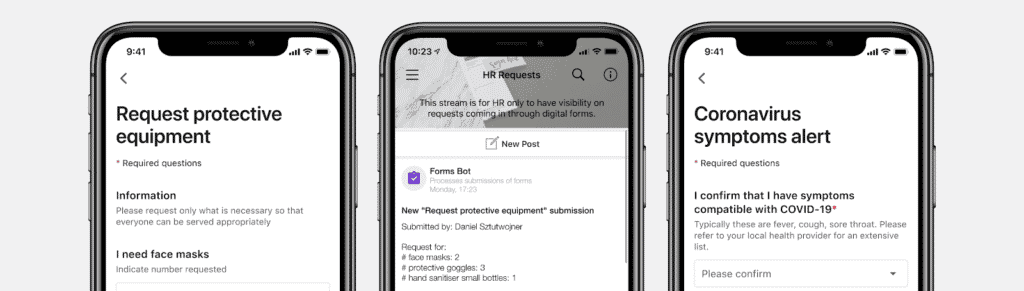
As a mobile-first internal communications platform, Beekeeper is a day-to-day communication solution designed with frontline workers in mind. In times of crisis, the agile software and change management platform supports business continuity throughout an entire organization.
- Supports crisis communication planning: When a crisis happens, reaction time is everything. Companies need to be prepared to connect with their employees. Beekeeper supports advance planning with group contact lists that personnel can easily create, manage and access when needed.
- Real-time, immediate communication: Disasters often render normal modes of communication useless. Beekeeper enables direct messaging to every worker immediately and the ability to send alerts and notifications company-wide.
- Secure platform: We use best-in-class 256-bit TLS encryption, advanced firewall protection, perform regular external security audits, and we have ISO 27001 certified data centers.
- Mobile access: In this current crisis of COVID-19 with no-touch work environments, nothing ever has to change hands. Beekeeper’s mobile platform is used by every individual on their personal device. For example, documents can be shared over the digital workplace instead of hard copies being passed around.
- Crisis communication streams: In a crisis situation, every team will have unique responsibilities and different roles. Beekeeper enables communication streams that can compile all crisis management messaging in one place.
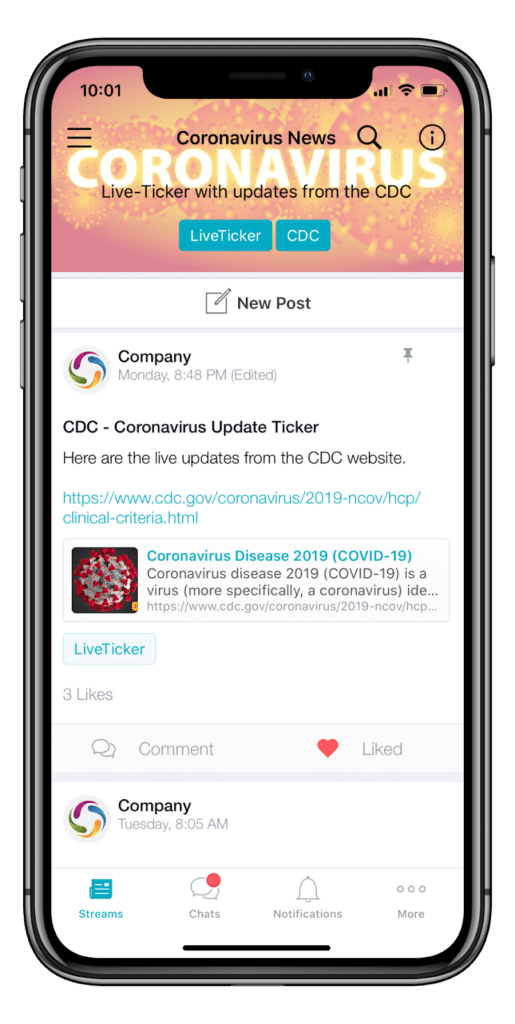
- Automation: In ordinary business times, Beekeeper supports HR teams and other administrative functions with automated systems. When an emergency takes everything offline, employees are still getting paid and are able to access internal documents and essential information.
- Confirmation campaigns: Ensure every worker is receiving urgent messages with read receipts and confirmation campaigns.
- Bottom-up communication: While business leaders choose Beekeeper for its two-way communication system that supports their bottom-up leadership approach under normal circumstances, facilitating inclusive communication during a crisis takes on additional weight. Employees might live in different areas and can share information that ensures the safety of their colleagues.
Flood and Fire: How One Casino Used Business Continuity Tools to Stay Connected in an Emergency
After the Oroville Dam ruptured in February 2017, the management of the Feather Falls Casino & Lodge had no way to communicate with many of their 520 employees, many of whom were evacuated from the area.
Realizing the unexpected can happen at any moment, the Feather Falls Casino team adopted the Beekeeper workforce management tool to ensure they’d never be in another situation where they could not reach their staff. They soon learned this was the right decision.
On November 8, 2018, the Camp Fire broke out just 25 miles away, becoming the deadliest, most destructive wildfire in California history. It hit close to home—44 employees were part of the mass evacuation and 20 lost their homes to the fire.
With fiber optic cables burned, Feather Falls teams lost internet connection. Beekeeper had been the main form of communication for the entire staff but quickly pivoted to support crisis communications which was essential to direct staff during the disaster.
That is the most important feature of a business continuity tool—the ability to pivot as unexpected events unfold and create resiliency from within.
About the author
Top


_en_opt.webp)