5 Future Workplace Trends That Will Transform Non-Desk Industries in 2021
2020 was a year unlike any other. Social distancing and new health and safety precautions placed new emphasis on the need to digitize the way we communicate with essential employees.

2020 was a year unlike any other. Social distancing and new health and safety precautions placed new emphasis on the need to digitize the way we communicate with essential employees.
Essential frontline workers were quickly thrust into the spotlight, along with their communication needs that have long been overlooked. As a result, companies already championing digital transformation in the workplace adapted quickly, while others found themselves rushing to find solutions.
As unusual as 2020 was, it will absolutely leave its mark on the years to come.
Here are five ways we predict that digital workplace technology will continue to transform workplace and employment trends in the coming year.
As companies start to prepare for the year ahead, many are tackling the lingering effects of the COVID-19 global pandemic, while creating their version of the “new normal.”
Let’s take a look at what are some workplace trends for 2021.
1. Digital Transformation Will Dominate the Workplace Environment
In our Frontline Worker Technology Report, we found that despite the COVID-19 global pandemic, mobile connectivity among frontline workers hit an all-time high in 2020. Additionally, global mobile device usage increased by 70%.
What’s driving this?
The future of the front line will be mobile:
- 96% of young workers in the U.S. own a smartphone
- 22% of younger adults relying solely on smartphones for access to the internet
With the future of the frontline workforce increasingly connected via mobile devices, reaching your workforce through their own smartphones is now mission-critical for business success.
Here are the four stages of digital transformation we expect companies to undergo in 2021:

- Reach & Connect: Start with a goal to reach the entire workforce, no matter where they are.
- Digitize: Transform traditional, top-down communication channels like paper-based and in person processes, with flexible digital channels that can be updated instantly.
- Automate: Save time by automating existing workflows and processes through integrations and chatbots.
- Optimize: Continuously improve processes with access to rich data and analytics.
2. Prioritizing Frontline Digital Enablement
Did you know despite the fact that frontline workers make up most of the global workforce, just 1% of enterprise IT spending goes towards frontline digital enablement?
Here’s why that’s an issue:
- In manufacturing, Industry 4.0 is changing how frontline employees communicate with each other and with next-generation equipment. Without digital tools, employees are not equipped to work efficiently in the factories of the future.
- In retail, customers are looking to frontline workers for information now, not later. Without digital tools, employees aren’t empowered with the knowledge to address customer questions quickly.
- In hospitality, health and safety regulations can change quickly (sometimes overnight). Without digital tools, companies risk employees working from outdated cleaning protocols.
Mobile employee communication apps are the best solutions companies can adopt to stay ahead of these challenges and digitally enable essential workers.
Here are some Beekeeper 2.0 features that help with every step of the digital enablement process:
- Reach & Connect: Reach and connect with everyone by communicating in their native language with inline translations.
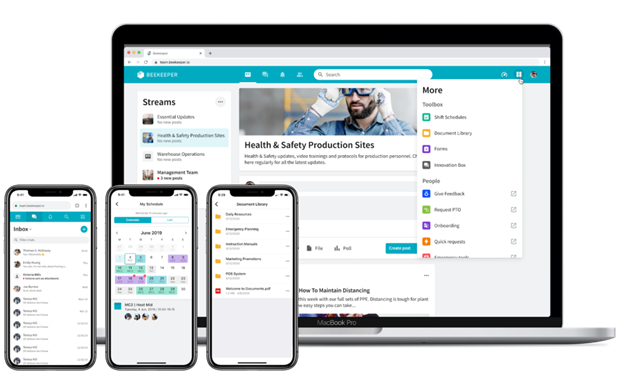
- Digitize: Give employees access to everything they need right on their mobile devices with a digital Document Library, Shift Schedules, and Forms.
Pro tip: According to a McKinsey study, companies can cut costs up to 90% and improve turnaround times just by digitizing information-intensive processes.
- Automate: Workflow automations and chatbots will allow HR and Internal Communication departments to create a more personalized, tailored digital workplace experience for their team.
- Optimize: Have all the data you need to do your best work with Beekeeper’s specialized Home widget.
3. Boosting Efficiency Will Matter Even More
When it comes to future employment trends, companies will be looking to double down on output and maximize every dollar spent.
This means efficiency will matter even more.
Take a look at these surprising workplace productivity statistics:
- The average frontline worker wastes 3 hours per week looking for information. At an organization of 1,000, this adds up to millions of dollars wasted per year.
- In a recent Harvard Business Review survey, 86% of respondents said frontline workers need better technology to make good decisions in the moment.
- And, 72% saw an increase in productivity just by empowering frontline workers
In the next phase of work, companies are concentrating on:
- Productivity: Companies are focusing heavily on operational efficiency and cutting costs where they can. As a result, improving employee productivity matters immensely.
- Safety and Compliance: The return to normal is already underway in some areas of the world. And with it, businesses are trying to stay on top of evolving health and safety regulations that can change instantly.
- Agility: The pathway to our new normal isn’t a straight line. Which means businesses want to be equipped to remain flexible in changing situations.
With mobile communications apps, companies are:
- Able to pivot in times of crisis by giving employees instant access to critical information no matter their location
- Able to access data and analytics to understand employee productivity better
- Saving time, money, and resources by creating a centralized platform that better enables frontline employees to do their jobs effectively
- Empowering their workforce to make their own decisions with the information available to them
4. Hands-Free Communication Will Remain Essential
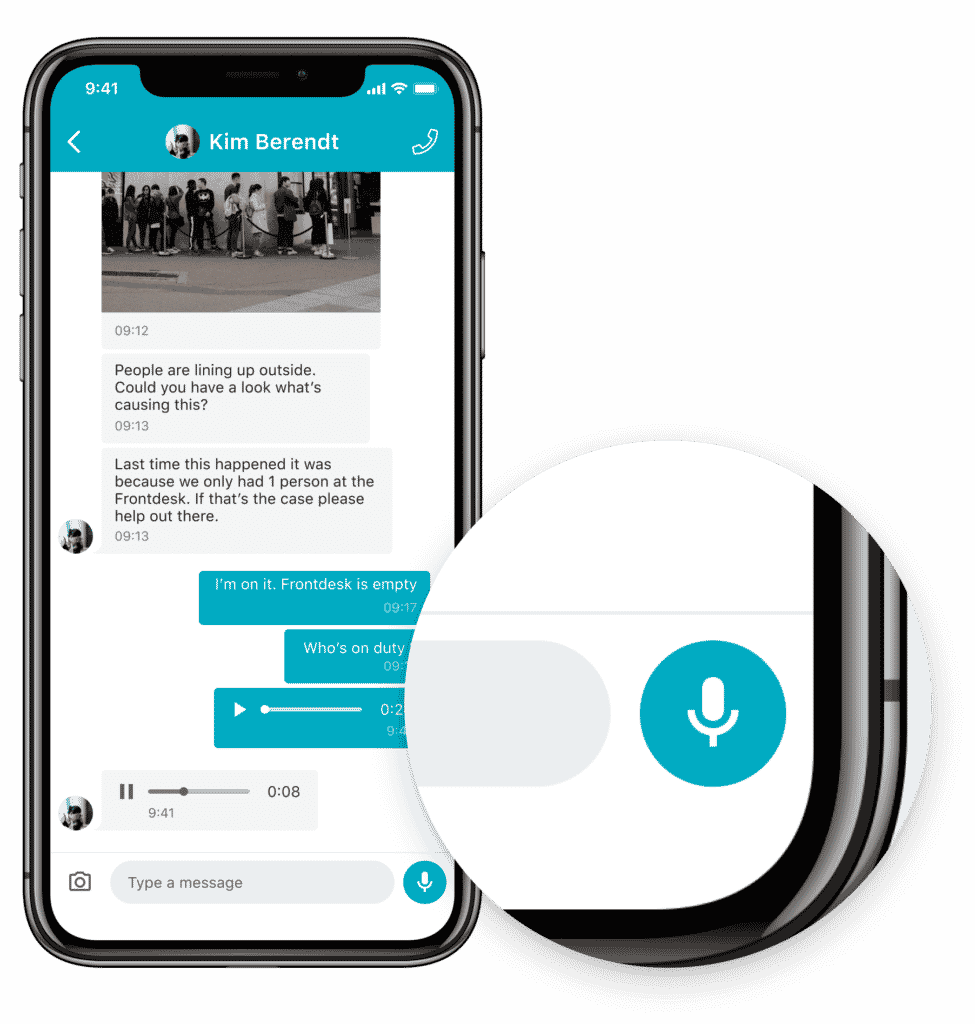
Frontline workers have very different communication needs than their desk-bound counterparts. They’re constantly on the move. Their hands are always busy, and many times their jobs may prohibit texting while they’re out on the floor.
For these workers, taking time to painstakingly type out chat messages to their colleagues just isn’t always practical. For these reasons, digital workplaces designed for frontline workers will need an alternative way for them to communicate that doesn’t involve manual texting.
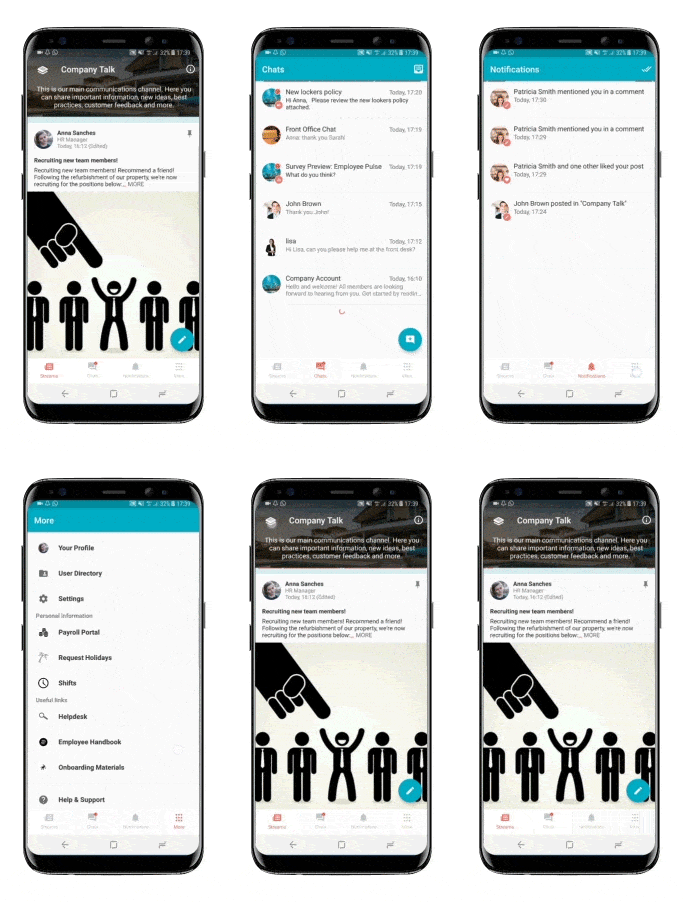
That’s why voice messaging-like features are popping up left and right in workplace software designed for the frontlines. Because they need a communication solution that’s fast, easy, and most importantly — hands free.
5. Introducing The “New Work Nucleus”
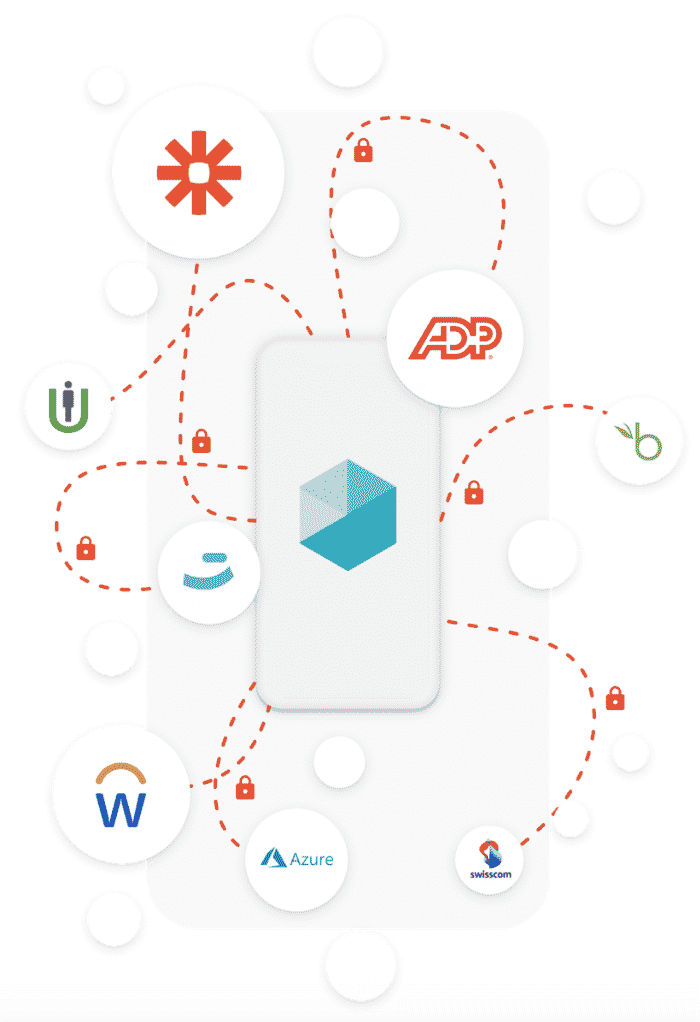
Did you know over 60% of companies with majority frontline employees seek out a digital workplace to centralize communication?
In 2021, having a centralized platform for a digital workplace will remain critical.
Gartner refers to this as the new work nucleus, which is “a collection of SaaS-based personal productivity, collaboration, and communication tools, combined into one cloud office product. It generally includes email, instant messaging, file sharing, conferencing, document management and editing, search and discovery, and collaboration.”
Having the ability to integrate different tools and softwares your team uses is critical.
Thankfully, platforms like Beekeeper allow users to completely customize their digital workplace by:
- Adding on features
- Building their own integrations
- Creating workflow automations through Zapier
- Integrating Beekeeper with their other workplace apps in our Marketplace
Want more insight into the future of work for frontline employees? Fill out the form below to download our Frontline Trends Report.
About the author
Top