Collaboration in the Workplace at Scale: Strategies & Benefits
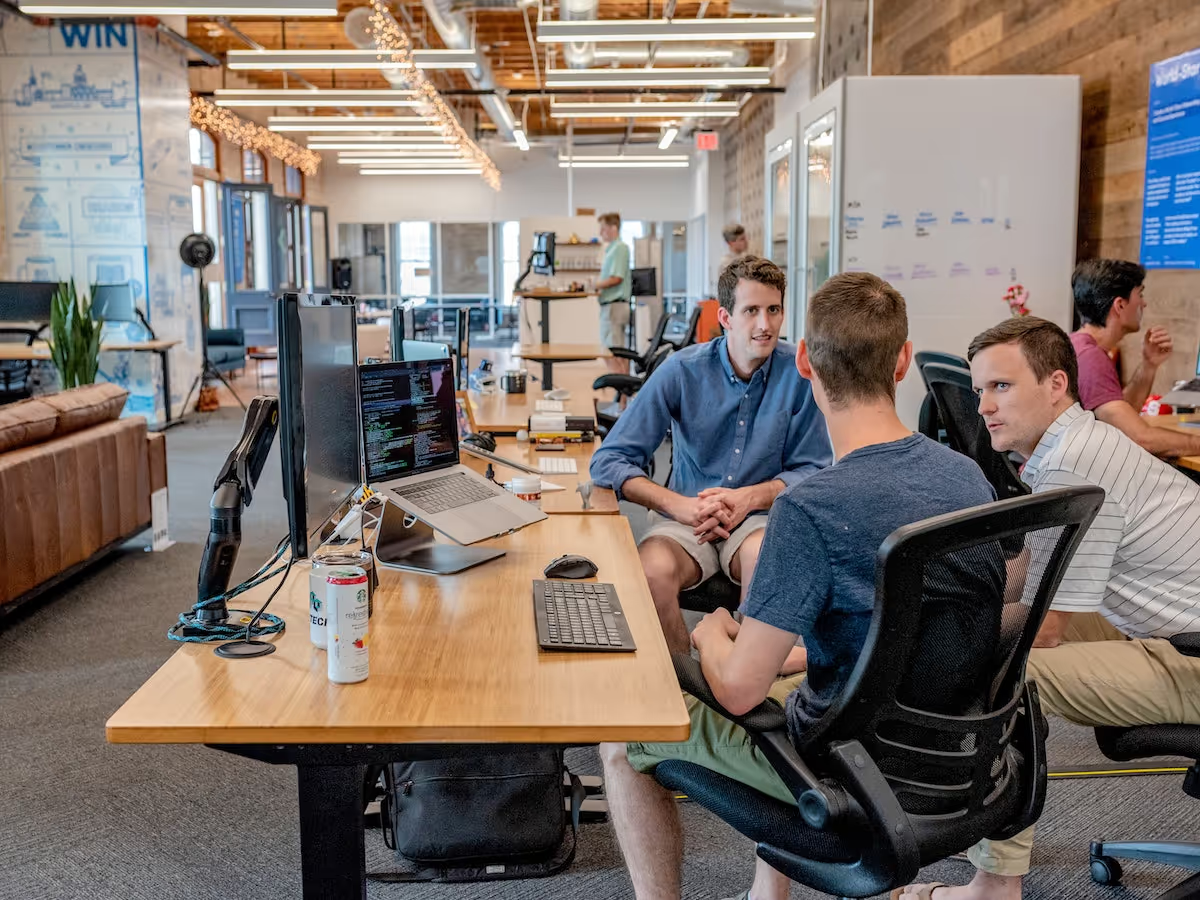
Work today happens across more tools, more channels, and more teams. Employees move between chat, email, meetings, documents, intranets, and business apps throughout the day.
At the same time, organizations are supporting hybrid schedules, distributed teams, and frontline workforces with different communication needs. That creates complexity, but it also creates an opportunity to design collaboration more intentionally.
When employees have better access to information, clearer context, and more relevant communication, teams can coordinate more smoothly and move work forward with more consistency.
This guide breaks down where workplace collaboration works, where it loses momentum, and what organizations can do to strengthen it.
What Is Collaboration in the Workplace?
Collaboration in the workplace is the process of working together to achieve a shared outcome. It includes communication, but goes beyond simply exchanging updates. Collaboration also depends on shared goals, context, tools, and accountability.
It’s also different from teamwork. Teamwork describes people working together as a group. Collaboration is what turns shared decisions, feedback, knowledge-sharing, and coordination into progress.
Work moves more smoothly when employees:
- Understand the goal
- Know where to find the latest information
- See how their part connects to the rest
That shared understanding turns day-to-day coordination into meaningful progress.
To understand the benefits of collaboration more clearly, it helps to start by examining how collaboration shows up across an organization.
Types of Workplace Collaboration
Collaboration looks different depending on team structure, work model, and workflow.
- Within-Team Collaboration: Often centers on shared goals, status updates, meetings, documents, and task coordination. It works best when responsibilities are clear, and information stays current.
- Cross-Functional Collaboration: Brings together teams such as HR, IT, internal communications, operations, and department leaders. It becomes especially important during onboarding, change communication, policy rollouts, culture initiatives, and product launches, where shared context matters as much as shared meetings.
- Remote and Hybrid Collaboration: Supports employees working across office, remote, field-based, and frontline environments. Since these groups often work in different conditions, mobile access, central communication, and inclusive information-sharing become especially important.
- Asynchronous Collaboration: Helps teams work effectively across time zones, shifts, or schedules. Clear documentation, searchable knowledge, and recorded updates often help people move faster than relying solely on live meetings.
These types of collaboration may look different in practice, but they all rely on visibility, relevance, and access.
Key Benefits of Workplace Collaboration
The most useful ways to improve workplace collaboration make it easier for employees to find information, coordinate across teams, and contribute in ways that fit their day-to-day work.
Better Productivity and Execution
When employees know where to find information, who owns what, and how work is progressing, they can move forward with less delay. That reduces duplicated effort, improves handoffs, and helps teams spend more time on high-value work.
Faster Knowledge Sharing and Problem-Solving
Collaboration helps knowledge move across the organization rather than remain isolated within a single team or person. That makes it easier to answer questions, share expertise, transfer skills, and solve issues earlier.
Stronger Alignment and Consistency Across Teams
As organizations grow, collaboration helps teams stay aligned on priorities, messages, and processes. That supports more consistent execution across locations, departments, and business functions.
Higher Engagement and Sense of Connection
Employees are more likely to stay engaged when they understand how their work contributes to larger goals and can participate in shared progress. Collaboration supports this by making work more visible, connected, and inclusive.
Greater Innovation From Diverse Input
New ideas often come from different teams bringing different perspectives to the same challenge. Strong collaboration creates more opportunities for that exchange, which can lead to better ideas and stronger decisions.
Common Challenges in Workplace Collaboration
Most organizations already recognize the value of collaboration. The real challenge is building the habits and systems that can support it across the business at scale.
- Information Silos: Limit visibility and make it harder for employees to see the full picture or connect their work to broader priorities.
- Fragmented Tools and Disconnected Systems: Spreads communication, documents, and workflows across too many places, making coordination less efficient.
- Message Overload: Makes it harder for employees to identify what matters most and act on the right information at the right time.
- Limited Visibility Into Effectiveness: Makes it difficult to see whether communication is reaching the right audiences or whether collaboration efforts are improving outcomes.
- Regional, Role-Based, and Workplace Differences: Adds complexity in large organizations, where collaboration often spans different locations, job functions, and work environments.
- Frontline Access Gaps: Limits touchpoints with corporate systems, making it harder for frontline employees to consistently access updates and resources.
- Hybrid Work Inconsistencies: Slows coordination when hybrid teams rely on uneven habits for meetings, handoffs, and documentation.
- Unclear Ownership in Cross-Functional Work: Slows momentum in cross-functional initiatives when responsibilities, decisions, or next steps are not clearly defined.
These challenges are solvable. With better structure, collaboration becomes easier to support, repeat, and improve.
Strategies to Improve Collaboration in the Workplace
The most effective strategies for collaboration in the workplace help employees find information quickly, coordinate clearly, and contribute in ways that fit how they work.
Centralize Communication and Knowledge
One of the most effective ways to improve workplace collaboration is to create a central hub for communication and knowledge. When news, policies, documents, resources, and team updates live in one place, employees can find what they need faster and move work forward with more confidence.
A central employee hub helps reduce friction by giving employees a single place to access the information they need. It also supports better self-service. Employees can find answers, complete routine tasks, and stay informed without waiting for manual follow-up.
This matters even more in large organizations, where clarity and speed need to scale across many teams and locations.
LumApps enables enterprises to bring communication, knowledge, and work tools into a single connected employee hub. It gives organizations integrated tools for collaboration across teams and work environments.
Break Down Silos
Collaboration grows when work becomes more visible. Teams need a clear view of shared goals, ownership, progress, and decisions to coordinate more effectively across functions.
Shared spaces, communities, and transparent documentation support that visibility. They reduce reliance on private inboxes, disconnected chat threads, or informal updates that are hard to track later. They also make it easier for teams to contribute input at the right time.
This is especially useful for cross-functional efforts such as onboarding, internal campaigns, operational changes, or product launches. When teams can see how the work connects, they can align earlier and execute more smoothly.
Foster a Collaborative Culture
Technology supports collaboration, but culture shapes how people use it. A collaborative culture starts with clear behaviors. Leaders play an important role by modeling openness, inviting input, and recognizing shared wins.
Active listening also matters. Employees collaborate more effectively when they know their ideas are welcome and their contributions are valued. Psychological safety helps create an environment where people can ask questions, raise concerns, and share ideas early.
Practical norms make this more consistent. Clear expectations for meetings, handoffs, follow-up, and documentation create stronger habits across teams.
For organizations looking to improve workplace collaboration, cultural progress becomes much more tangible when it is tied to repeatable behaviors.
Enable Personalization
Not every employee needs the same information at the same time. Personalization helps organizations deliver relevant communication based on role, team, location, or work environment, making collaboration more useful and inclusive.
This is especially important in enterprises with distributed workforces. A frontline employee, a people manager, and an HR leader may all be part of the same broader initiative, but each one needs a different context to act on it.
Relevant communication helps every audience stay connected to what matters most in their role. Personalization also supports focus. When employees receive information that fits their responsibilities, collaboration feels clearer and more actionable.
Measure Collaboration Effectiveness
Collaboration improves faster when leaders can measure what is working. That includes engagement metrics, participation levels, content usage, search behavior, and acknowledgment or completion rates for important updates.
These signals help teams determine whether communication reaches the right audiences and whether employees use shared resources meaningfully.
Qualitative feedback is important, too. Surveys, manager observations, and employee input can reveal where communication feels helpful and where more clarity is needed.
This kind of measurement matters for internal communications, HR, and IT leaders who need to show impact over time. LumApps’ onboarding materials also emphasize analytics to understand engagement, adoption, and content performance across the employee hub.
Best Practices for Building a Collaborative Workplace
A few practical habits can make collaboration more sustainable across the organization:
- Set shared goals and clear ownership.
- Document decisions and next steps.
- Choose tools that fit naturally into daily workflows.
- Make knowledge easy to find and trustworthy.
- Reduce unnecessary meetings and support async collaboration where it works better.
- Recognize collaborative behaviors, not just individual outcomes.
- Review metrics regularly and keep refining the experience.
These best practices help teams build collaboration into everyday work rather than treating it as a separate initiative. If your broader goal is to improve teamwork, these habits create a stronger foundation for doing it at scale.
Encourage Collaboration in the Workplace With LumApps
Collaboration in the workplace is both a people issue and a systems issue. Employees need clear communication, useful context, and easy access to the right resources. Organizations need a reliable way to support that across departments, locations, and work models.
LumApps helps bring those elements together. As a connected employee hub, it supports personalized communication, searchable knowledge, communities, analytics, and mobile access for both desk-based and frontline employees.
That gives organizations a clearer way to support alignment, knowledge-sharing, and coordinated work across the business.
Explore LumApps’ workplace collaboration solutions to see how connected communication and knowledge can support stronger collaboration at scale. Or watch a video demo to see the platform in action.
FAQ: Collaboration in the Workplace
How Does Collaboration Work in Hybrid Teams?
Hybrid collaboration works best when employees have equal access to communication, resources, and ways to contribute, whether they work on-site, remotely, or on the frontline. Clear documentation, mobile-friendly access, and inclusive communication practices help teams stay aligned across locations.
What Tools Improve Workplace Collaboration?
The most effective collaboration tools support communication, knowledge sharing, shared spaces, search, and access to workflows in a single, connected experience. That helps employees stay informed and take action without switching constantly between disconnected systems.
How Can You Measure Collaboration in the Workplace?
Organizations can measure collaboration through a mix of quantitative and qualitative indicators. Useful metrics include engagement, participation, content usage, search activity, and acknowledgment of key updates, as well as employee and manager feedback.
How Do You Improve Collaboration at Scale in Large Organizations?
Improving collaboration at scale starts with structure. Centralized communication, visible ownership, relevant information, and shared access to knowledge all make collaboration more consistent. Large organizations often make the most progress when collaboration is built into the employee experience itself.














Get started with LumApps
We would love to know more about your goals. How can we help?
