Les 10 intranets les plus populaires (et pourquoi le numero 1 pourrait vous surprendre)

The search for the perfect digital workplace is on. Companies everywhere are looking for the best way to connect their teams, streamline communication, and build a culture that sticks. But when you look at the data on the most popular intranets, the results tell a complicated story.
According to the recent Future of Work Index report, organizations are investing heavily in digital tools to manage change. But popularity doesn't always equal performance. Let's dive into the data, explore the top 10 platforms leaders are using today, and unpack why the biggest name on the list might actually be holding you back.
The Top 10 Most Popular Intranets
Based on data from the Future of Work Index, which surveyed business and communication leaders across the US and Europe, here are the most widely used intranet platforms:
- Microsoft SharePoint (53%)
- Google Sites (34%)
- Microsoft Viva Engage (31%)
- Interact (14%)
- Firstup (14%)
- Staffbase (13%)
- LumApps (12%)
- Workvivo (11%)
- Unily (Data point inferred from typical market presence, though explicitly 1-8 are in report text provided)
- Simpplr (Data point inferred from typical market presence)
Note: Percentages reflect respondents who utilize these platforms, often in combination.
Looking at this list, one name dominates the conversation. Microsoft SharePoint is used by over half of the respondents. It’s the default option for many because it comes bundled with Microsoft 365. But here is the critical question: Is SharePoint actually an intranet?
According to experts at Gartner and Forrester, the answer is no. In fact, they don’t even include SharePoint in their intranet platform rankings. And relying on it as one might be causing more friction than flow.
The SharePoint Paradox: Popularity vs. Purpose
SharePoint is everywhere. It’s a powerful tool for file storage and document management. But using it as the heart of your employee experience is like trying to use a filing cabinet as a town square. It stores things well, but it doesn't bring people together.
While 53% of leaders use it, satisfaction tells a different story. The Future of Work Index reveals that only 43% of senior leaders are highly satisfied with their intranet. If the most popular tool was doing its job, that number should be much higher.
Here is why relying on SharePoint as your primary intranet often falls short.
1. It’s Not Built for Connection
SharePoint was launched in 2001 with a focus on file sharing and permissions. It wasn't designed for the dynamic, two-way communication that modern teams need. It lacks the social features—like easy commenting, sharing, and community building—that drive genuine engagement.
A modern intranet needs to be a hub where culture lives. It should be a place where a frontline worker on a mobile phone feels just as connected as a manager in the head office. SharePoint’s rigid structure often creates silos instead of breaking them down.
2. The Personalization Problem
We live in a world of curated feeds. Your employees expect their work tools to be as smart as their personal apps. They want to see news that matters to them, not a generic blast of corporate updates.
SharePoint struggles with this. It is often non-profiled, meaning it’s hard to tailor the experience to individual roles or regions. This leads to "digital noise"—too much irrelevant information clogging up the feed. When employees can't find what they need quickly, they tune out.
3. Mobile Friction
The workforce is mobile. Whether it’s a sales rep on the road or a nurse on the floor, your team needs access from anywhere. SharePoint is primarily browser-based. While it has mobile options, the user experience is often described as clunky or difficult to navigate on a small screen.
If your intranet isn't mobile-first, you are effectively cutting off a huge portion of your workforce.
4. The Hidden Costs of "Free"
Many organizations stick with SharePoint because it feels "free" as part of their Microsoft license. But the cost of customization, maintenance, and IT support adds up fast.
To make SharePoint look and feel like a modern intranet, you often need heavy developer resources. Every tweak, every design change, every new integration becomes a project. A true intranet solution should be ready to run out of the box, freeing your IT team to focus on innovation rather than maintenance.
What to Look for in a Modern Intranet
So, if popularity isn't the best metric, what is? The best intranet is one that serves your people, not just your files.
As you evaluate the top 10 most popular intranets, look for a platform that offers:
- True Personalization: Can you target content by role, location, and interest?
- Seamless Integration: Does it play nice with the tools you already use (including Microsoft 365 and Google Workspace)?
- Mobile Excellence: Is the mobile app intuitive and fully functional?
- Employee Advocacy: Does it make it easy for employees to share content and become brand ambassadors?
- Analytics: Can you measure engagement and adjust your strategy in real-time?
A Breakdown of the 10 Popular Intranets
- Microsoft SharePoint
SharePoint dominates the market, largely due to its inclusion with Microsoft 365, but it's built as a document management system—not a true intranet. It falls short in personalization and mobile experience, often requiring extensive customization, and lacks the seamless integrations and analytics of modern employee-centric platforms. - Google Sites
Google Sites offers simple site-building and works best for basic information sharing. Its integration with Google Workspace is strong, but it lacks robust mobile capabilities, advanced personalization, and detailed analytics, making it less ideal for complex organizations seeking engagement and advocacy. - Microsoft Viva Engage
Viva Engage aims to connect employees socially and integrates well with Teams and Outlook. While it offers some community features, it still relies heavily on Microsoft’s ecosystem, with limited third-party integrations and a mobile experience often described as solid but not standout. - Interact
Interact provides strong personalization and robust analytics, helping organizations target content and understand engagement. Its integrations are broad and the mobile app is well-regarded, though complex installation can challenge less tech-savvy teams. - Firstup
Firstup is designed for scalable communication and excels at content targeting and scheduling, with good analytics for measuring reach. It focuses on one-way messaging, so employee advocacy and true two-way engagement can be limited. - Staffbase
Staffbase is a popular employee experience platform known for its strong mobile support and intuitive usability. It offers good personalization, analytics, and third-party integrations, though deep customization may require technical expertise. - LumApps
LumApps stands out for AI-powered personalization, seamless integration with both Microsoft 365 and Google Workspace, and real-time analytics. Its mobile-first design, strong employee advocacy tools, and robust content management make it a top choice for global enterprises. - Workvivo
Workvivo offers a social, community-driven intranet experience with an approachable mobile app and accessible analytics. It empowers employee advocacy and engagement, though larger enterprises may desire more advanced integrations. - Unily
Unily excels in analytics, advanced targeting, and employee engagement. Its mobile capabilities and integrations are strong, though the platform can require significant investment and configuration to maximize its features. - Simpplr
Simpplr delivers a clean, user-friendly interface and easy navigation with good mobile support. Personalization and employee advocacy features are solid, while analytics and integrations are capable but not as deep as some enterprise-focused competitors.
A Smart Path Forward
The goal isn't just to have an intranet; it's to have a thriving digital headquarters.
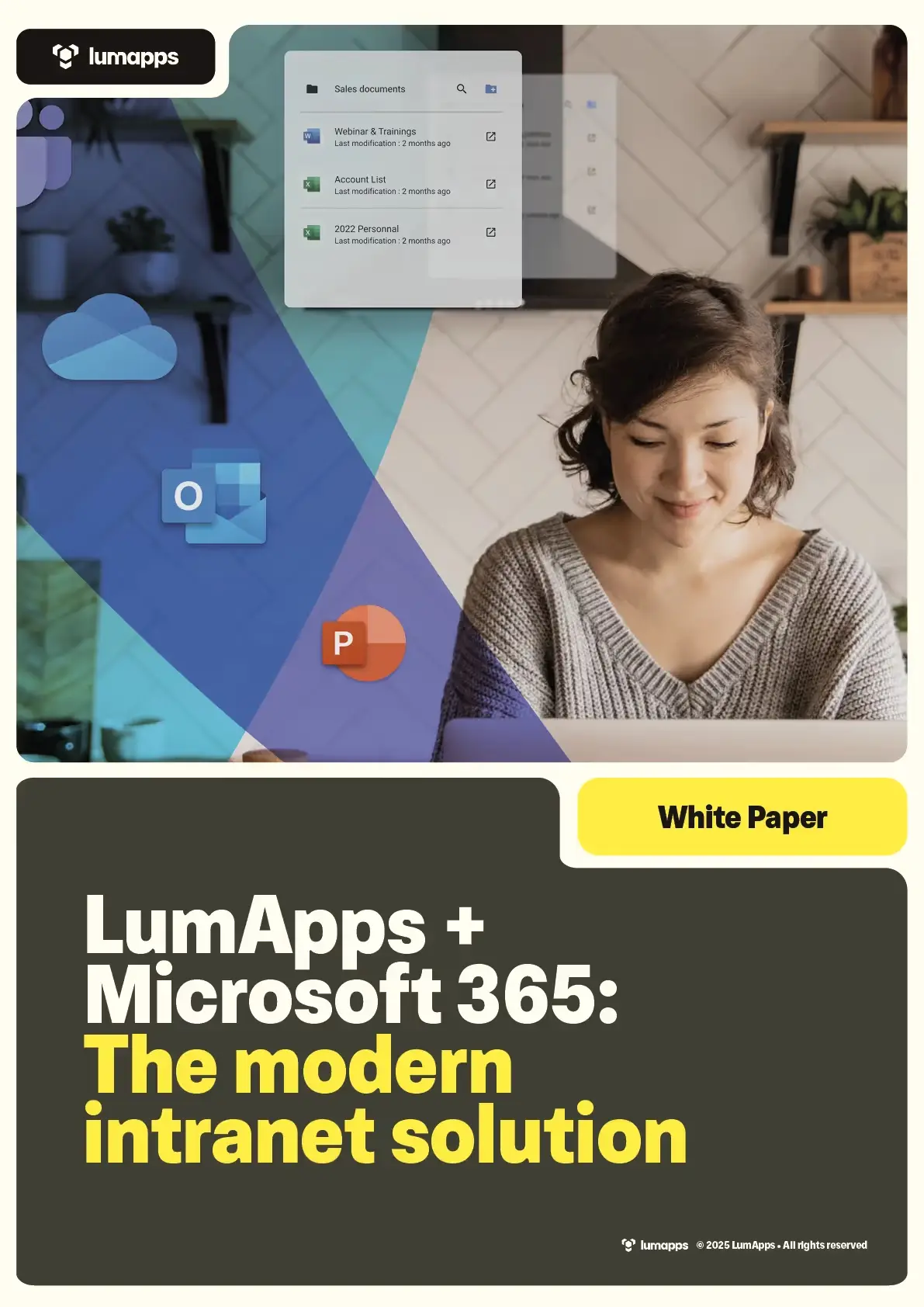
Platforms like LumApps (which ranked in the top 10) are designing for this future. Instead of just storing documents, they create an Employee Experience Platform (EXP). This approach puts the employee at the center. It uses AI to deliver the right information to the right person at the right time. It connects the dots between desk workers and frontline teams.
By choosing a purpose-built solution, you aren't just buying software. You are investing in clarity. You are giving your team a single pane of glass to view their work, their colleagues, and their company culture.
Conclusion
The data shows that while legacy tools like SharePoint hold the market share, they often miss the mark on experience. As you look at the list of the most popular intranets, challenge the default choice.
Your workplace is unique. Your solutions should be, too. Don't settle for a tool that just stores files. Look for a partner that builds culture, drives connection, and helps your team move faster. The future of work is bright, and with the right tools, your organization can lead the way.

_en_opt.avif)